
Commercial Pool Resurfacing
Resurfacing for HOA, condo, apartment, and hotel pools, planned around your residents, your board, and the health department.
What Commercial Resurfacing includes
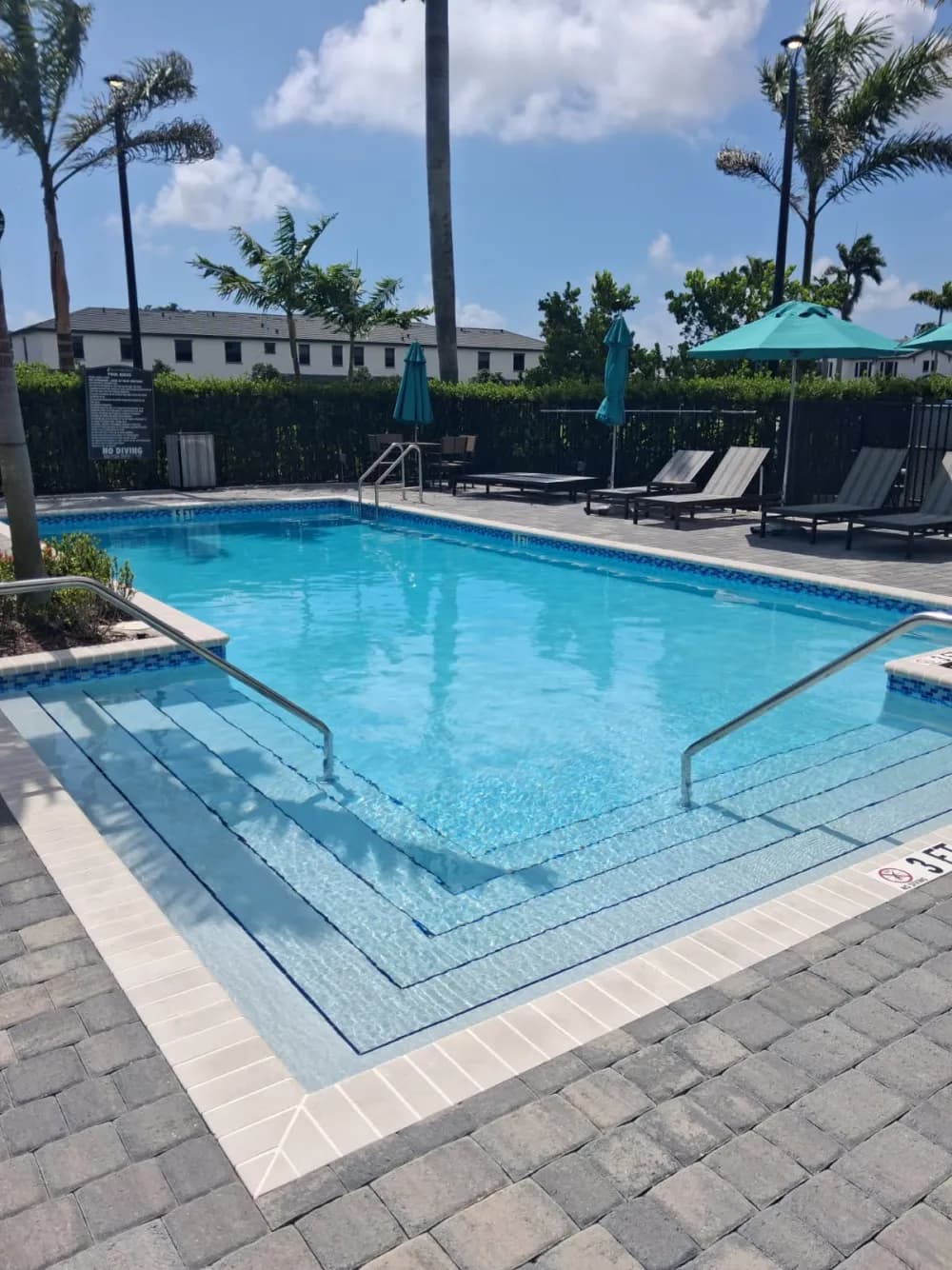
Resurfacing a community pool is a different job from resurfacing a backyard one. The surface is larger, everyone loses the pool while it's down, the board needs a number it can vote on, and a public pool comes with health-department requirements a home pool never sees. We resurface HOA, condo, apartment, and hotel pools across Palm Beach and Broward: plaster, quartz, and pebble finishes, waterline and step-edge tile, and main drain covers brought up to code while the pool is empty. Every job is managed by us start to finish under our Florida Certified Pool/Spa Contractor license (CPC1461731), with trusted specialists brought in where the job calls for it, and we run the 28-day startup ourselves.
- ✓Site walk with a written condition report the board can circulate
- ✓Line-item proposal — drain, prep, finish, tile, drain covers, refill, and startup priced separately
- ✓Finish options: plaster, quartz, Diamond Brite, and pebble
- ✓Waterline tile, step-edge tile, and depth-marker tile reset or replaced
- ✓Main drain covers brought to current anti-entrapment code while the pool is empty
- ✓Health-department requirements confirmed with the county before the pool is drained
- ✓Drain timed to the water table, with the hydrostatic relief valve checked first
- ✓Refill and the full 28-day startup, run by us
- ✓Downtime scheduled around the season, your residents, and a target reopening date
HOA boards, condo associations, property managers, and hotel operators with a community pool that's rough underfoot, delaminating, staining, or losing its finish — or a reserve study that says the surface is due.
How a commercial resurfacing job runs
The finish goes on in a day. The weeks around it are what a board is actually buying: a pool that's down for as short a time as possible, a number that doesn't move after the vote, and a surface that lasts its full life.
- 1Walk the pool and write it up
We inspect the surface for etching, delamination, hollow spots, and exposed aggregate, check the tile and coping, and note the drain covers and their dates. You get a written condition report the board can circulate, including whether you need a resurface now, next season, or a smaller repair.
- 2Price it line by line
Drain, prep, finish, tile, drain covers, refill, and startup, each priced separately, so the board can see exactly what it's voting on and adjust scope without guessing.
- 3Settle the health-department side first
A public pool isn't a backyard pool. Before anything is scheduled we confirm with the county health department what the scope requires, so the pool doesn't sit empty waiting on paperwork.
- 4Schedule the downtime
A community pool can't close on a contractor's convenience. We plan the drain around the season, your residents, and the water table, and give you the date the pool comes down and a target reopening date.
- 5Drain safely, prep, and resurface
The drain is timed to the water table with the hydrostatic relief valve checked. The old surface is prepped to a sound base with a bond coat so the new finish adheres, tile and drain covers are handled while the pool is empty, and the finish goes on.
- 6Refill and run the 28-day startup
Daily brushing, plaster dust removal, and no-shock chemistry while the surface cures, run by us. It's the stretch that decides whether the new finish lasts its full life.
Price the finish per year, not per job
Boards naturally compare the bottom line of each bid, but the finish you redo twice as often isn't the cheap one. Pebble costs more up front and lasts two to three times as long as plaster, which usually makes it the cheapest finish per year of service. Plaster wins on the up-front number and loses on the cycle.
The other half of a finish's life is the water. Year-round chlorination, low pH, and South Florida's calcium-heavy fill water are what wear finishes out early here, and the first 28 days after refill matter most of all. That's why we run the startup ourselves, and why a pool that stays in balanced chemistry afterward gets the most out of whatever finish the board chooses.
Commercial Resurfacing — Common Questions
It's priced like any resurface — by surface area and finish, plus tile, drain covers, and the startup — and a community pool usually has far more surface than a backyard pool. A single published range would be wrong for most pools, so we don't post one. You get a written, line-item proposal after we walk the pool, so the board votes on an exact number rather than an estimate.
The drain, prep, and new finish take days once the work starts, and the fresh surface then needs its startup period while it cures. The proposal includes a target reopening date built around the finish, the weather, the water table, and anything the health department needs to sign off on, and we schedule the drain for the season that costs your residents the least pool time.
In South Florida chemistry, pebble lasts longest at about 15–20 years and is usually the cheapest per year of service. Plaster has the lowest up-front cost and the shortest life at about 5–7 years, with quartz (7–10) and Diamond Brite (5–10) in between. Pebble is also rougher underfoot, which is worth weighing on a pool with a lot of daily use. We walk the board through the trade-offs with samples.
It can. Florida's public pool rules require plan review before a pool is substantially modified, and that review is separate from local building permits. Whether your scope counts is a question for the county health department, and we get that answer before the pool is drained, not after.
Yes, and it's the right time to do it. Public pools must have compliant anti-entrapment drain covers under the federal Virginia Graeme Baker Act, and the covers carry a rated service life. Replacing them with the pool drained is simpler than doing it later, and a missing or damaged cover is a violation that can close the pool on sight.
We manage every commercial resurfacing job start to finish under our Florida Certified Pool/Spa Contractor license (CPC1461731), with trusted specialists brought in where the job calls for it, and we run the 28-day startup ourselves. The board deals with one company from the first walk to the reopening.
Why Homeowners Choose Florida's Best Pools
Want a number for your pool? Run yours through our pool service cost calculator.
Ready to get started?
Free on-site evaluation. Flat-rate pricing. Same-tech, same-day weekly service.