


Pre-Purchase Pool Inspection
Before you close, find out what the pool is really going to cost you.Starting at $150–$350 flat — flat-rate pricing, free on-site inspection, no contracts.
What Pre-Purchase Inspection includes
Your home inspector gives the pool a ninety-second visual glance — that is not a pool inspection, and it isn't their fault; it's outside their scope. A dedicated pre-purchase pool inspection runs the equipment under load, pressure-tests the plumbing, reads the salt cell's actual output, evaluates the plaster and the screen enclosure, and gives you a written report with real repair numbers while you're still inside your inspection contingency. Buyers routinely discover $1,400–$12,000 of deferred maintenance the seller already knew about — in time to negotiate it or walk.
- ✓Pump tested under load — amp draw, priming, seal and impeller condition
- ✓Heater fired and run to temperature (a heater that starts is not a heater that works)
- ✓Salt cell output measured against its rated production, not just its display
- ✓Plumbing pressure test — suction and return lines, valves, unions
- ✓Filter opened and media inspected, with remaining service life estimated
- ✓Plaster / Diamond Brite condition — etching, mottling, hollow spots, remaining life
- ✓Screen enclosure structural check — anchors, corroded fasteners, panel damage
- ✓Automation and pool light function and safety check
- ✓Full water chemistry baseline (tells you how the pool was maintained)
- ✓Written report with photos and itemized 2026 repair costs, delivered for your contingency window
Buyers under contract on a South Florida home with a pool, and their agents — anyone who needs a defensible repair number before the inspection contingency expires.
What to expect: our pre-purchase inspection
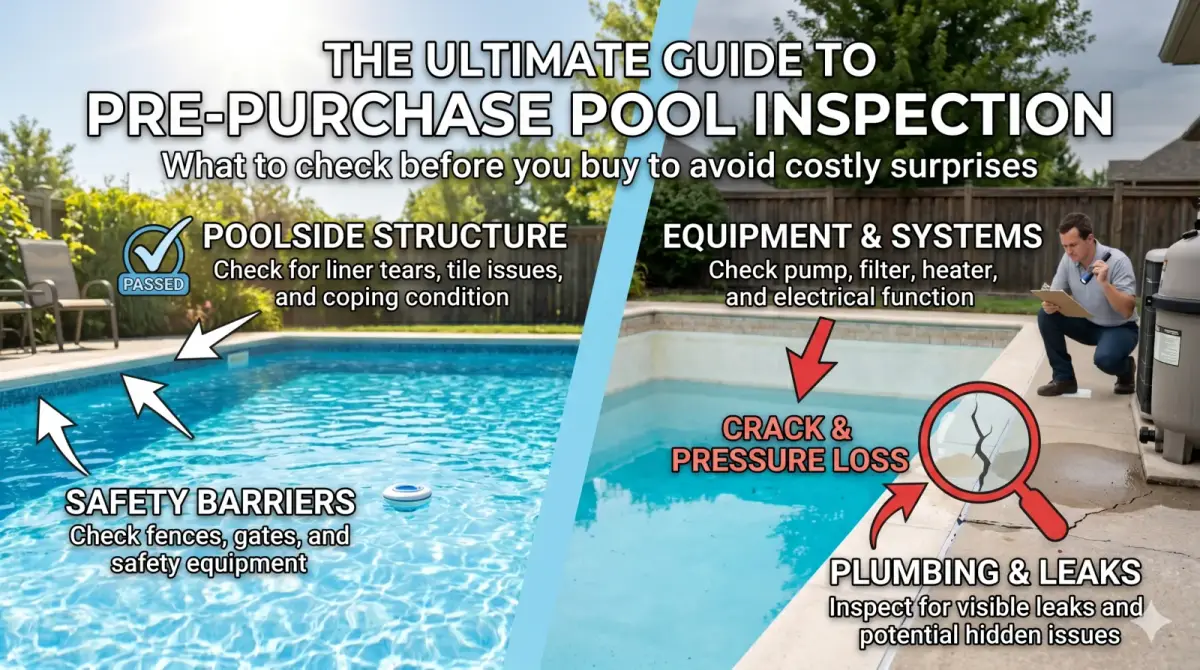
The whole point is to convert "the pool looks fine" into a number you can take to the negotiating table. So we test the things that cost money to fix, under the conditions they actually fail in, and we write down what we find with photographs.
- 1Equipment under load
We run the pump and read its amp draw, listen to the bearings, and check the seal and impeller. A pump that turns on can still be months from a $1,400–$2,400 replacement — the load test is what tells the difference.
- 2Heater to temperature
We fire the heater and run it up, because a heater that ignites and a heater that heats are two different things. Heat exchangers fail quietly, and that failure is a $4,000–$5,000 repair or a $5,000–$7,000 new unit.
- 3Salt cell output test
The cell's own display drifts and lies. We measure what it is actually producing against its rated output and estimate remaining life. A cell at the end of its run is $800–$2,100 installed, and near the coast they only last three to four years.
- 4Plumbing pressure test
Suction and return lines get pressure-tested and the valves and unions inspected. An underground leak is the single most expensive surprise a pool can hide, and it does not show up on any visual walkthrough.
- 5Surface and structure
We evaluate the plaster or Diamond Brite for etching, mottling, and hollow spots and estimate remaining life — a plaster resurface is $7,500–$12,000 and Diamond Brite runs $8,000–$15,000, so knowing whether it has two years left or ten changes the offer. Screen enclosure anchors and fasteners get checked for salt-air corrosion.
- 6Chemistry baseline
A full water panel tells us how the pool was actually maintained, not how it was described. CYA over 100 ppm or calcium over 500 tells a story about the last few years that the seller's disclosure usually doesn't.
- 7Written report
You get a photo-documented report with every finding itemized at real 2026 South Florida repair costs, delivered inside your contingency window. Hand it to your agent, the seller, or another contractor — it's yours.
Why the home inspection doesn't cover this
This is not a criticism of home inspectors. Florida home inspectors work to a defined standard of practice, and running pool equipment under load, pressure-testing pool plumbing, and measuring salt cell output sit outside it. What you get on the pool in a standard home inspection report is a visual observation — the water was clear, the pump was running, the deck had no obvious cracks. Every one of those statements can be true on a pool that needs eleven thousand dollars of work.
The gap matters most on exactly the things that cost the most: a heat exchanger that ignites but doesn't hold temperature, a salt cell at forty percent output, a suction line losing pressure underground, plaster with two years left instead of ten. None of those are visible. All of them are testable.
What we find most often on South Florida pools
The pattern repeats. Cyanuric acid over 100 ppm, which means the pool has been run on tablets for years and the chlorine has not been working properly for a while. Calcium hardness north of 450 ppm from years of top-offs with our hard fill water, which is scale on the tile, in the heater, and inside the salt cell. A salt cell two-thirds through its life on a house half a mile from the ocean. Screen enclosure fasteners corroded through where salt air gets at them.
None of that is fraud on the seller's part. Most sellers genuinely don't know — they had a service company, the water looked good, and nobody ever told them the cell was aging or the plaster was thinning. But the bill arrives after closing, and by then it's yours. The inspection is what moves that conversation to before.
What you do with the report
The report is written to be used. Every finding is photographed and itemized at real 2026 South Florida repair costs, so your agent can attach it to a repair request or a credit demand without translating anything. Buyers typically use it one of three ways: ask the seller to fix the items, ask for a price reduction covering them, or — occasionally, when the number is large enough — walk away inside the contingency and keep the deposit.
There is no obligation to use us for any of the repairs we find, and we quote them at the same prices we'd quote anyone. If you do end up owning the pool, we'd like to earn the weekly service, and we'll tell you honestly whether the pool needs it. But the report stands on its own, and it's yours whichever way the deal goes.
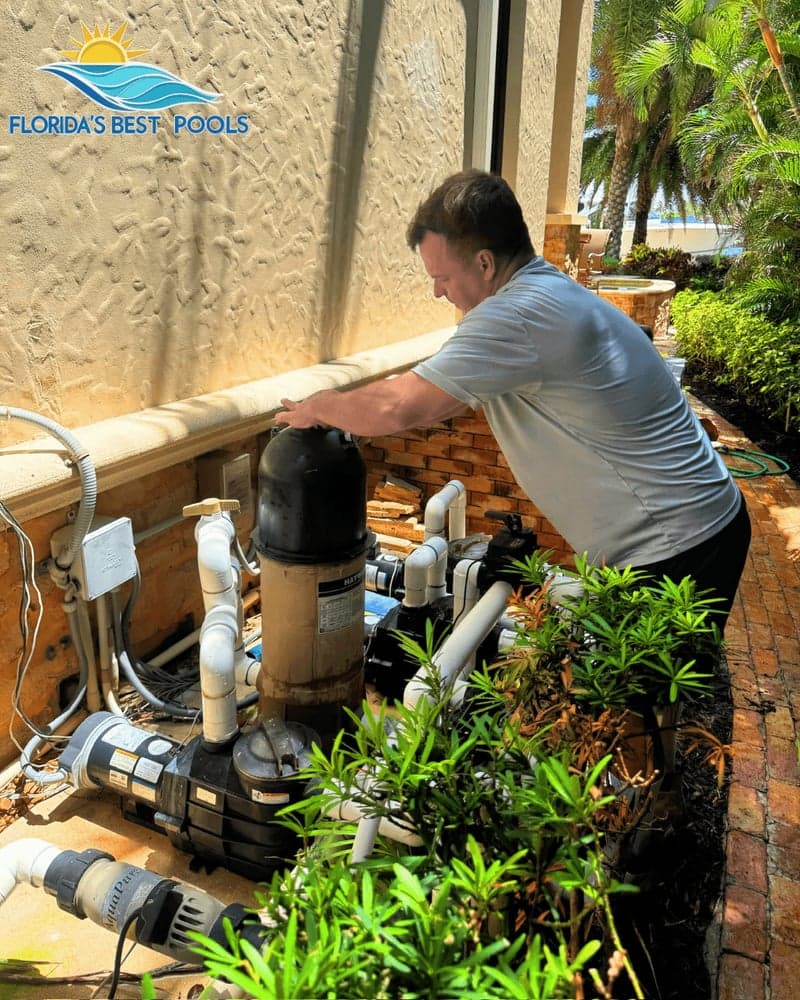
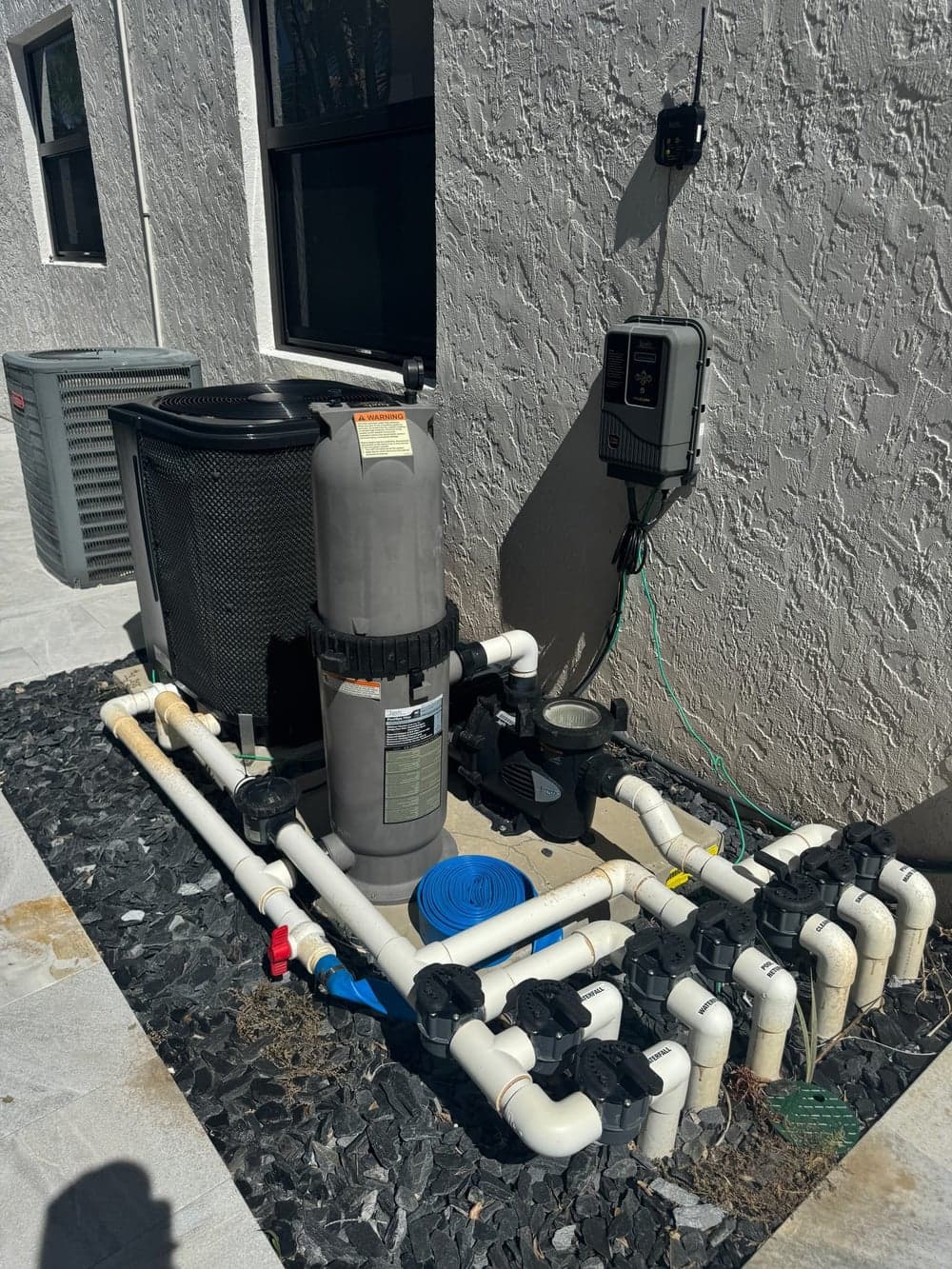
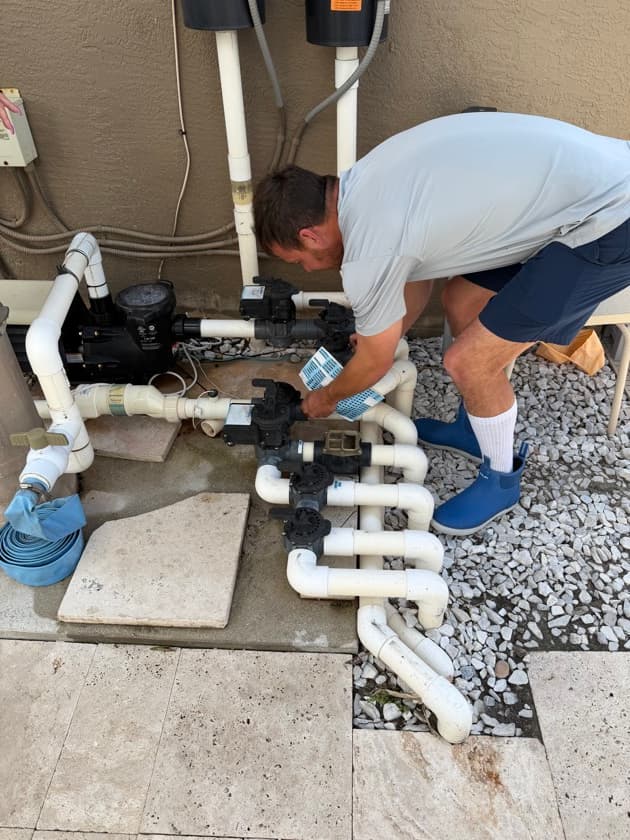
On the job in South Florida
Pre-Purchase Inspection — Common Questions
A dedicated pre-purchase pool inspection runs $150–$350 in 2026 across Palm Beach and Broward counties, with the price depending on pool size, how much equipment is on the pad, and whether there's a spa, heater, salt system, or screen enclosure to evaluate. That includes the written photo report with itemized repair costs. For context on the return: buyers routinely find $1,400–$12,000 of deferred maintenance that a home inspection didn't surface, which makes this one of the cheapest line items in a real estate transaction relative to what it protects.
Only visually, and that's a scope limitation rather than a shortcut. Florida home inspectors work to a defined standard of practice that does not include running pool equipment under load, pressure-testing pool plumbing, or measuring salt chlorine generator output. A standard home inspection report will tell you the water was clear and the pump was running. It cannot tell you the heat exchanger is failing, the salt cell is at forty percent, or the return line is losing pressure underground — and those are the findings that carry four-figure and five-figure price tags.
Different customer, different purpose, different report. Our equipment inspection is a preventive service for people who already own their pool — an annual deep-dive to catch problems early and plan replacements. The pre-purchase inspection is transaction work for buyers under contract: it's scheduled against your inspection contingency deadline, it includes plaster life and screen enclosure structure alongside the equipment, and the deliverable is a negotiating document with itemized repair costs your agent can attach to a repair request.
Inspection contingencies are usually tight, so we prioritize these. Tell us your deadline when you call and we'll work to it — in most of our service area we can get out within a couple of business days, and the written report follows within twenty-four hours of the visit so you have it in hand with time to act. If your window is genuinely short, say so on the phone and we'll tell you honestly whether we can meet it rather than take the booking and miss it.
In rough order of cost: plaster or Diamond Brite near the end of its life, which is a $7,500–$12,000 resurface for plaster and $8,000–$15,000 for Diamond Brite; a failed or failing heat exchanger, at $4,000–$5,000 to repair or $5,000–$7,000 for a new heater; an underground plumbing leak, where the excavation is often worse than the repair; a variable-speed pump on its way out at $1,400–$2,400 installed; and a salt cell at the end of its run at $800–$2,100. The chemistry baseline matters too — cyanuric acid over 100 ppm or calcium hardness over 450 means a drain and refill is coming, and it tells you how the pool was treated for the last several years.
No, and the report doesn't change if you don't. Every finding is quoted at the same 2026 prices we'd give anyone, and the document is yours to hand to the seller, your agent, or a competing contractor. We'd obviously like to earn your weekly service once you own the place, and we'll tell you straight whether the pool actually needs it — but the inspection is a standalone product and we price it that way on purpose.
Yes. Screen enclosure anchors and fasteners corrode from the inside out in South Florida salt air, and a structure that looks fine can be one storm from a claim — that's a $200–$2,500 repair range depending on panel count. We also check the safety barrier situation, because Florida's Residential Swimming Pool Safety Act requires a compliant barrier and a pool you're about to own that lacks one is your compliance problem the day after closing, not the seller's.
Tell us in advance if you know, and we'll still inspect — but understand the limits and we'll state them plainly in the report. Equipment that can't be powered on can't be load-tested, and a green pool hides the plaster surface entirely. In those cases we document what we can verify, flag explicitly what could not be assessed and why, and recommend making the seller restore power or clear the water as a condition. A report that pretends to have checked something it couldn't is worse than no report.
Why Homeowners Choose Florida's Best Pool Service
Ready to get started?
Free on-site evaluation. Flat-rate pricing. Regular-tech, same-day weekly service.