
Between Matt Balog (our founder), Ronald Liddell, Doug Santiago, and me, we've put 40+ years of combined founder experience into Florida's Best Pools, and one of the smartest $300 a South Florida homebuyer can spend during closing has nothing to do with the house and everything to do with the pool. I also own Dolphin Claims, a Florida Public Adjusting firm, so I've seen the back end of this: the “pool was fine at closing” claim that turns into a $14,000 plaster resurface six months in, or the heater that fired once at inspection and never again. The home inspector's 90-second “the pool looks good” line in your inspection report is not a pool inspection. This is.
Why the home inspection isn't enough
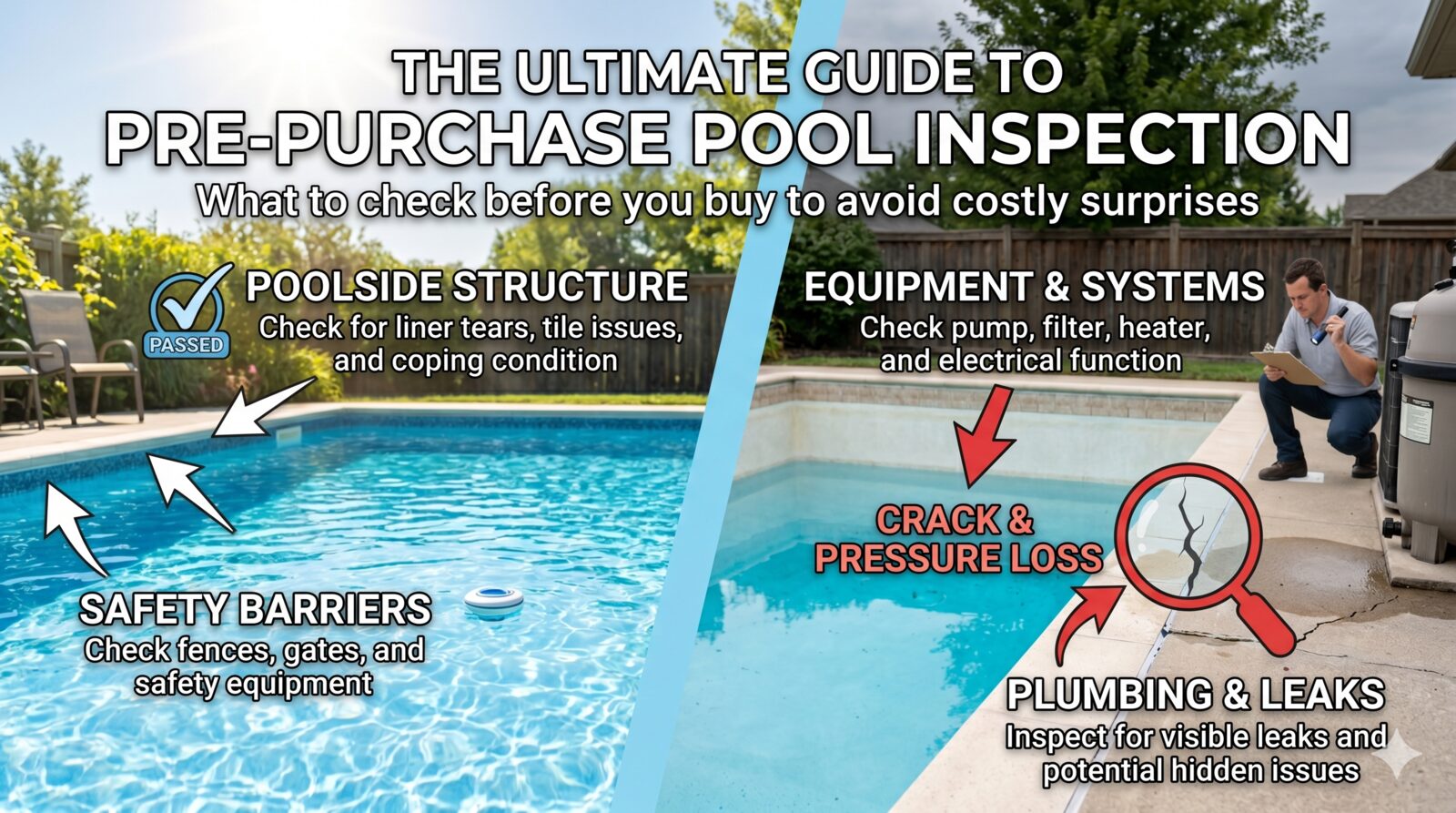
Florida's licensed home inspectors operate under the Standards of Practice (Chapter 61-30, F.A.C.), which require them to visually observe the pool equipment and note obvious defects. They are not required to — and almost universally do not — run heaters under load, test salt cell amperage output, pressure-test the plumbing, dive the main drain, calibrate-test water chemistry, or evaluate plaster condition past visual scan. Every InterNACHI and ASHI standard pool addendum reads roughly the same: “Pool inspection limited to visual observation. A specialty inspection is recommended.”
That language — “a specialty inspection is recommended” — is the line most buyers skim over. It's also the line that, if read seriously, would prevent the most common post-closing pool surprises we get called out to in our service corridor.
What a real pre-purchase pool inspection covers
| System | Standard home inspection | Dedicated pool inspection |
|---|---|---|
| Pump & motor | Confirms it powers on | Runs full cycle, bearing audible check, amperage draw vs. nameplate, seal integrity, prime test, suction-side leak check |
| Heater (gas or heat pump) | Visual only — often not fired | Fired under full load, exhaust check, error codes pulled, pressure switch test, BTU output observation |
| Salt cell (if applicable) | Not tested | Output amperage measured, cell condition photographed, expected remaining life estimated |
| Filter | Confirms presence | Pressure baseline logged, media inspected (cartridge pleats / sand surface / DE grids), o-ring condition |
| Plumbing | Visible pipes only | Pressure test on suction and return lines, equipment-pad valve isolation, autofill function |
| Plaster / interior finish | Visual sweep | Etching, calcium scale, hairline cracks, staining patterns, age estimate, refinish-timeline forecast |
| Tile | Often unexamined | Waterline scumline, loose tiles tapped, grout condition, scaling severity |
| Coping & deck | Visual | Settling cracks, separation from coping, expansion joint condition |
| Light (niches) | Confirms it lights | Niche conduit integrity, GFCI test under load, bonding wire visible-and-attached check |
| Bonding & electrical | Often skipped | Pool bonding lug check, equipment-pad bonding continuity, GFCI testing per NEC 680 |
| Automation | Visual only | Schedule pulled, error log reviewed, valve actuator function tested |
| Screen enclosure / cage | Visual only | Connector condition, footer attachment, panel integrity, post-storm condition forecast |
| Main drain & suction safety | Not tested | VGB-compliant cover confirmed, suction safety verified, dive if needed |
| Water chemistry | Not tested | Full water panel: FC, pH, TA, CH, CYA, salt, phosphates |
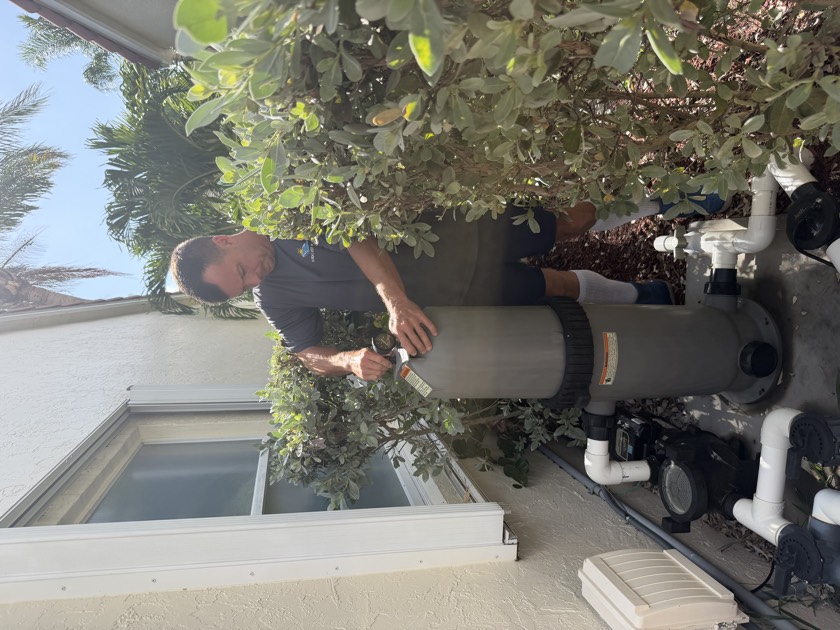
The five most common surprises we find — and what they cost
Across pre-purchase inspections in our service corridor in 2024–2025, here are the five most common deferred-maintenance items the seller didn't disclose, ranked by frequency and surprise cost:
- End-of-life salt cell ($800–$2,100). Cell still produces some chlorine, displays “normal,” but output amperage measured against nameplate shows 30–50% degradation. Six to 12 months from emergency replacement. Found in roughly 28% of salt-pool inspections.
- Pump bearing wear ($1,400–$2,400). Audible bearing whine at full RPM, often only at startup or under low-flow conditions. 3–8 months from full failure. Found in roughly 18% of pump inspections on pumps older than 5 years.
- Heater pressure switch / flame sensor fault ($150–$450 service / $1,400–$3,200 if heater core damaged). Heater fires intermittently or shows fault codes. Often the seller has been “not using the heater.” Found in roughly 20% of gas heater inspections.
- Plaster at end-of-life / heavy etching ($7,500–$12,000 resurface). Visible plaster pitting, exposed aggregate in pebbletec pools, white powder when walls brushed. Often masked by recent paint or by clear water that hides surface damage. Found in roughly 12% of pools older than 10 years without recent resurface.
- Screen enclosure connectors corroded / hurricane-marginal ($2,500–$8,000 cage repair or replace). Particularly in coastal corridor (within 3 miles of ocean). Galvanized connectors with rust bleed through powder coat, footer cracks, panel detachment risk. Found in roughly 22% of screen enclosures older than 8 years.
Any one of these five items, undisclosed, is worth more than 50 to 200 times the cost of the pool inspection.
Florida's pool stock is older than buyers realize — the age cohort breakdown, equipment-failure curves by build year, and county-level density data sit in our 2026 Florida Pool Construction Market Index. Useful context if you're shopping a 1990s or early-2000s Palm Beach or Broward home and trying to gauge what deferred maintenance is statistically waiting for you.
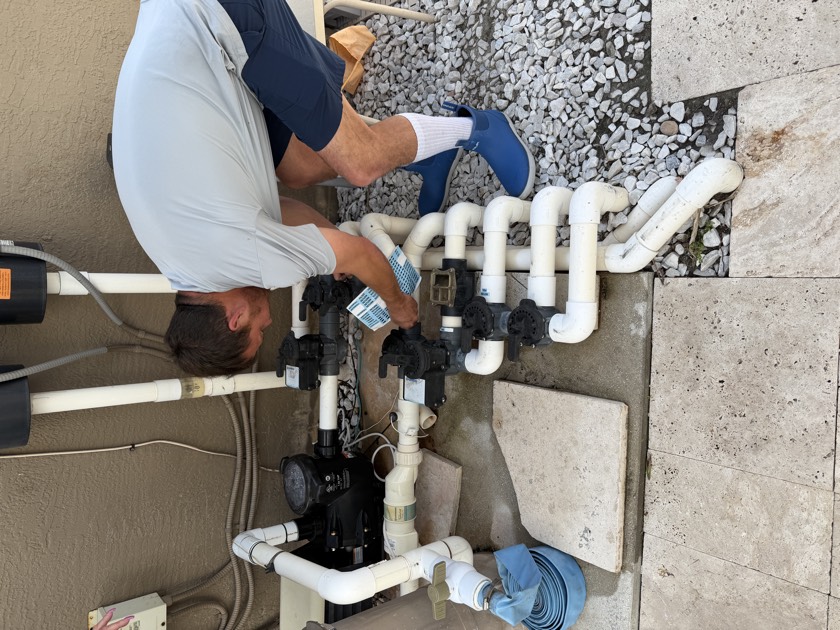
The insurance angle — why a written report matters even after closing
I'll put my Public Adjuster (Dolphin Claims) hat on for one paragraph. Homeowners insurance in Florida covers pool equipment damage from sudden, accidental causes — not from pre-existing wear, gradual deterioration, or undisclosed prior damage. If your salt cell fails three months after closing and the inspection report shows it was already 50% degraded at the time of purchase, the insurance position becomes “pre-existing — not covered.” Conversely, if the cell tested at full output at the time of a documented pre-purchase inspection and fails later from a clearly sudden cause (lightning strike, surge event, freeze damage), your claim is much stronger. The inspection report is the dated baseline. Without it, you're arguing facts with no record. Note: this is general information, not insurance advice — talk to a licensed adjuster for your specific claim.
When to schedule the inspection
The ideal window is 7–14 days before the closing date — far enough out that you can negotiate seller repairs or credits within the inspection contingency period (typically 10–15 days from contract on a standard Florida residential purchase agreement), close enough that the findings are still current at closing. Common workflow:
- Day 0: Sign purchase contract. Inspection contingency clock starts.
- Day 3–5: Standard home inspection. Pool addendum confirms “specialty inspection recommended.”
- Day 5–7: Schedule dedicated pool inspection. Most reputable firms can complete within 3–5 business days of booking.
- Day 8–10: Receive written report with findings, photos, and cost estimates for any flagged items.
- Day 10–12: Negotiate with seller — repairs before closing, seller credits at closing, or price reduction. Sellers in Florida typically respond to documented pool findings with at least partial concession.
- Day 14+: Re-inspection if repairs were agreed (additional $75–$150 for a follow-up visit).
What a pool inspection costs in 2026 South Florida
| Inspection level | 2026 cost | What you get |
|---|---|---|
| Basic visual (some home inspectors offer) | $0–$100 (included in home inspection) | Visual scan, photo set — not a real inspection |
| Standard pool inspection | $150–$250 | Equipment-pad walk-through, pump + heater function test, water chemistry baseline, plaster visual |
| Comprehensive pool inspection | $250–$350 | Full equipment isolation + pressure test, salt cell amperage, heater fired under load, photo-documented report, cost estimates per finding |
| Comprehensive + dive (commercial / older pools) | $400–$600 | All above + main drain inspection, niche dive, plaster condition rated by zone |
| Re-inspection (after seller repairs) | $75–$150 | Verify agreed-upon repairs were completed correctly |
Red flags to look for yourself before you even book the inspection
- Pool was “just resurfaced” — verify with the contractor and check warranty transfer. A six-month-old resurface still under warranty is excellent. An “eight-year-old resurface that looks new” is paint.
- Heater “works but we never use it” — translates to “hasn't fired in 3 years and probably won't now.” Demand a fire test.
- Salt cell display reads “normal” but pool can't hold chlorine — cell output degraded, the display lies past 50% wear.
- Equipment pad has efflorescence (white powdery deposit on concrete) — slow leak. Trace and price before closing.
- Pump runs but motor is hot to touch within 30 minutes — impeller drag, bearing wear, or motor failure imminent.
- Tab feeder full of fresh tabs and the pool is “new owner” — check CYA. If it's 100+ ppm at closing, you inherit a drain-and-refill bill.
- Pool autofill running constantly — either active leak or stuck-open valve. Check water bill history if available.
- Screen enclosure with brown bleed-through at connector points — galvanized fastener corrosion. Coastal pools worst affected.
What to negotiate with the seller
Florida sellers, especially in a normal market, will negotiate documented pool findings. The options:
- Seller pays for repair before closing. Best when the repair is small ($500 or less) and the contractor is one you trust.
- Seller credit at closing. Best when the repair is larger or you'd rather pick your own contractor. Common framing: dollar-for-dollar against the inspection findings.
- Price reduction. Equivalent to a credit but reduces your loan amount — typically only worth doing on repairs over $2,000.
- As-is with knowledge. You take the issue knowing the cost and budget for it. Use only when you've already won other concessions and want this one for leverage.
Want a number for the pool you're about to buy?
Once you've closed and have the keys, run the pool through our pool service cost calculator to get the realistic monthly band for ongoing care. Or read our first 90 days as a new pool ownerguide — it's the operational playbook for the year following closing.
The low-risk first step
If you're under contract on a South Florida home with a pool and the inspection contingency window is still open, the lowest-risk first step is a dedicated pool inspection— before closing, not after. We perform comprehensive pre-purchase pool inspections in our service corridor, deliver a written report with photos and cost estimates promptly after the on-site visit, and we'll talk through findings on a call so you walk into the negotiation prepared.
Florida's Best Pools is family-owned, CPO C-105377, fully insured, and runs weekly routes through Boca Raton, Delray Beach, Fort Lauderdale, Highland Beach, Boynton Beach, Pompano Beach, Coral Springs, Coconut Creek, Wellington, and the surrounding South Florida service corridor. Same tech every visit (once your route is established). Photo-documented service reports on request. Month-to-month — no long-term lock-in. Built around 40+ years of combined founder experience between Matt Balog, Joe Ford, Ronald Liddell, and Doug Santiago.
Schedule a pre-purchase pool inspection or call 954-347-1120. Tell us your closing date and we'll work backward.
Frequently Asked Questions
Dedicated pre-purchase pool inspection runs $150–$350 in 2026; Covers what a home inspector legally cannot — pump health, heater load test, salt cell output, plaster condition, plumbing pressure test, automation diagnostics, screen-enclosure structure, water chemistry baseline; Standard home inspections are "visual only" and disclaim anything past confirming pump runs and water is visible; Skipping it typically masks $1,400–$12,000 of deferred maintenance the seller knows about and the buyer doesn't; Schedule 7–10 days before closing; use written report to negotiate seller credits or repairs before closing — not after.
No — not in any meaningful sense. Florida's licensed home inspectors operate under Chapter 61-30 F.A.C. which requires only visual observation of pool equipment and notation of obvious defects. They are not required to run heaters under load, test salt cell amperage, pressure-test plumbing, dive the main drain, run a calibrated water-chemistry panel, or evaluate plaster condition past a visual sweep. Every InterNACHI and ASHI standard pool addendum explicitly states 'Pool inspection limited to visual observation. A specialty inspection is recommended.' Most buyers skim that disclaimer. The pool section of a home inspection report is essentially 'the pump powers on and the water is clear' — not a real inspection of the systems.
A standard dedicated pool inspection runs $150–$250 in 2026 — covers equipment-pad walk-through, pump and heater function test, water chemistry baseline, and visual plaster condition. A comprehensive inspection runs $250–$350 and adds full equipment-pad isolation and pressure test, salt cell amperage measurement, heater fired under full load, photo-documented report with cost estimates per finding. Comprehensive-plus-dive (for commercial pools or older residential with main drain concerns) is $400–$600. Re-inspection after seller-agreed repairs runs $75–$150. Compared to the five most common findings — salt cell ($800–$2,100), pump bearing ($1,400–$2,400), heater fault ($150–$450 to $3,200), plaster end-of-life ($7,500–$12,000), or screen enclosure ($2,500–$8,000) — the inspection cost is a tiny fraction of what it commonly uncovers.
Schedule it 7–14 days before your closing date — far enough out that any findings can be negotiated within the inspection contingency period (typically 10–15 days from contract on a standard Florida residential purchase agreement), close enough that the findings are still current at closing. The typical workflow: sign contract day 0; standard home inspection day 3–5; book the pool inspection day 5–7 (most reputable firms complete within 3–5 business days); receive written report day 8–10; negotiate with seller day 10–12; re-inspection if repairs were agreed, day 14+. Don't wait until the last week of closing — you lose your negotiating leverage if you're past the contingency window.
Across pre-purchase inspections in our service corridor in 2024–2025, the five most common deferred-maintenance items are: (1) end-of-life salt cell with 30–50% output degradation, $800–$2,100 to replace, found in about 28% of salt-pool inspections; (2) pump bearing wear with audible whine at full RPM, $1,400–$2,400 replacement, found in 18% of pumps over 5 years; (3) gas heater pressure switch or flame sensor fault, $150–$450 service or up to $3,200 if heater core damage, found in 20% of gas heater inspections; (4) plaster at end-of-life with visible etching and pitting, $7,500–$12,000 resurface, found in 12% of pools over 10 years without recent refinish; (5) screen enclosure connectors corroded with hurricane-marginal integrity, $2,500–$8,000 cage repair, found in 22% of enclosures over 8 years, worst in coastal corridor.
Four negotiation paths: (1) seller pays for the repair before closing — best when the repair is small (under $500) and your inspection company can recommend a contractor you trust; (2) seller credit at closing — best when the repair is larger or you'd rather pick your own contractor, with framing typically dollar-for-dollar against the inspection findings; (3) price reduction — equivalent to credit in cash terms but reduces your loan amount, only worth doing on repairs over $2,000; (4) as-is with knowledge — you take the issue knowing the cost and budget for it, use only when you've already won other concessions and want this one for leverage. Florida sellers in a normal market typically respond to documented pool findings with at least partial concession.
Yes, indirectly but materially. Florida homeowners insurance covers pool equipment damage from sudden, accidental causes — not from pre-existing wear, gradual deterioration, or undisclosed prior damage. If your salt cell fails three months after closing and there's a documented inspection report from 5 weeks before closing showing the cell was already 50% degraded, the insurance position becomes 'pre-existing — not covered.' Conversely, if the inspection report shows the cell tested at full output and the failure later was caused by a clearly sudden event (lightning strike, surge, freeze damage), your claim is significantly stronger. The inspection report is your dated baseline. As both a pool company owner and a Florida Public Adjuster through Dolphin Claims, I've seen both sides of this on real claims. General information, not insurance advice — talk to a licensed adjuster for your specific situation.
Yes, especially then. The home inspector's 'looks fine' is based on a visual scan of equipment that may or may not have been powered on, a glance at the water, and a check that the pump runs. It explicitly does not test heater function under load, measure salt cell output, pressure-test plumbing, evaluate plaster condition past surface visible, or run a calibrated chemistry baseline. Every one of the five most common surprises (salt cell at 50% output, pump bearing whine, heater faulting under load, plaster etching, screen connector corrosion) can hide behind a 'visually fine' assessment because they require specific tests to detect. The home inspection report itself usually says 'specialty inspection recommended' in the pool section — that's the line worth taking seriously.
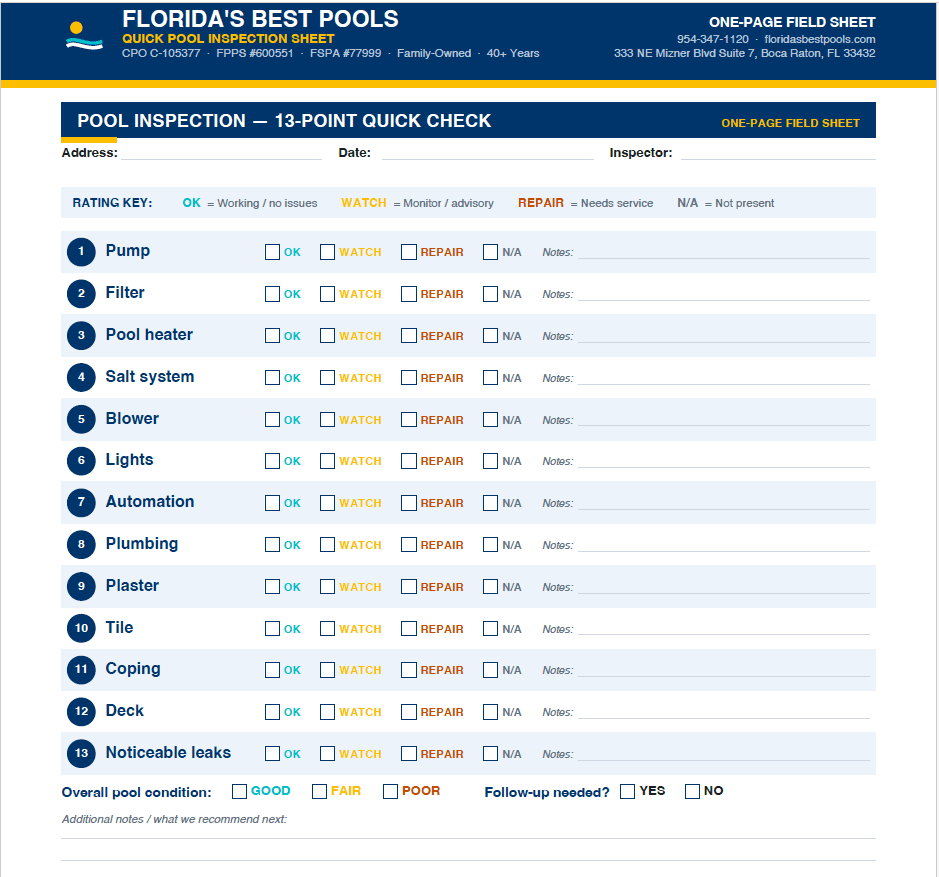
Roughly 14 systems get dedicated testing: pump and motor (full cycle, amperage vs. nameplate, bearing audible check, seal integrity, prime test, suction-side leak check), heater (fired under full load, exhaust check, error codes pulled, pressure switch test, BTU output observation), salt cell (output amperage measured, cell condition photographed, life estimated), filter (pressure baseline, media inspection, o-rings), plumbing (pressure test on suction and return, equipment-pad valve isolation, autofill function), plaster (etching, scale, hairline cracks, staining, age estimate, refinish forecast), tile (scumline, loose tiles, grout, scaling), coping and deck (settling, separation, expansion joints), light niches (conduit integrity, GFCI under load, bonding wire), bonding and electrical (lug check, continuity, NEC 680 GFCI), automation (schedule, error log, valve actuators), screen enclosure (connectors, footers, panels, storm forecast), main drain (VGB compliance, suction safety, dive if needed), and water chemistry (a full water panel: FC, pH, TA, CH, CYA, salt, phosphates).
Eight common tells: (1) pool was 'just resurfaced' — verify with the contractor and check warranty transfer; (2) heater 'works but we never use it' — usually translates to 'hasn't fired in years,' demand a fire test; (3) salt cell display reads 'normal' but pool can't hold chlorine — cell output degraded, the display lies past 50% wear; (4) equipment pad with white powdery efflorescence on concrete — slow leak, trace and price before closing; (5) pump runs but motor hot to touch within 30 minutes — impeller drag, bearing wear, or motor failure imminent; (6) tab feeder full of fresh tabs and pool is 'new owner' — check CYA, if 100+ ppm you inherit a drain-and-refill bill; (7) pool autofill running constantly — active leak or stuck valve, check water bill history; (8) screen enclosure with brown bleed-through at connector points — galvanized fastener corrosion, coastal pools worst affected.
Yes, and it's actually advantageous — but ask up front about how they handle the dual role. A reputable inspection company gives you the same findings whether or not you become a service client; the inspection is paid for, the report stands on its own, and any service relationship is your decision afterward. Watch for two anti-patterns: (1) an inspector who waives the inspection fee in exchange for a service contract sign-up at closing — the report value can shift; (2) an inspector who finds problems only their company can fix on a timeline that requires immediate service — common with cage repair upsells. Our practice: written inspection report with photos and cost estimates regardless of whether you sign up for service; service quote is separate; no pressure to bundle.
Need a pro to handle this?
Florida's Best Pools has serviced South Florida homes for 40+ years. CPO-licensed. Fully insured. 230+ five-star reviews.