
The heater is the piece of equipment South Florida homeowners get wrong more than any other— over-paying to fix it, replacing it too late, or cooking it with bad chemistry and a bad install. After 30 years on the route, here's the 2026 repair-vs-replace cost math for Boca Raton, and the $10,000 mistake I see most.
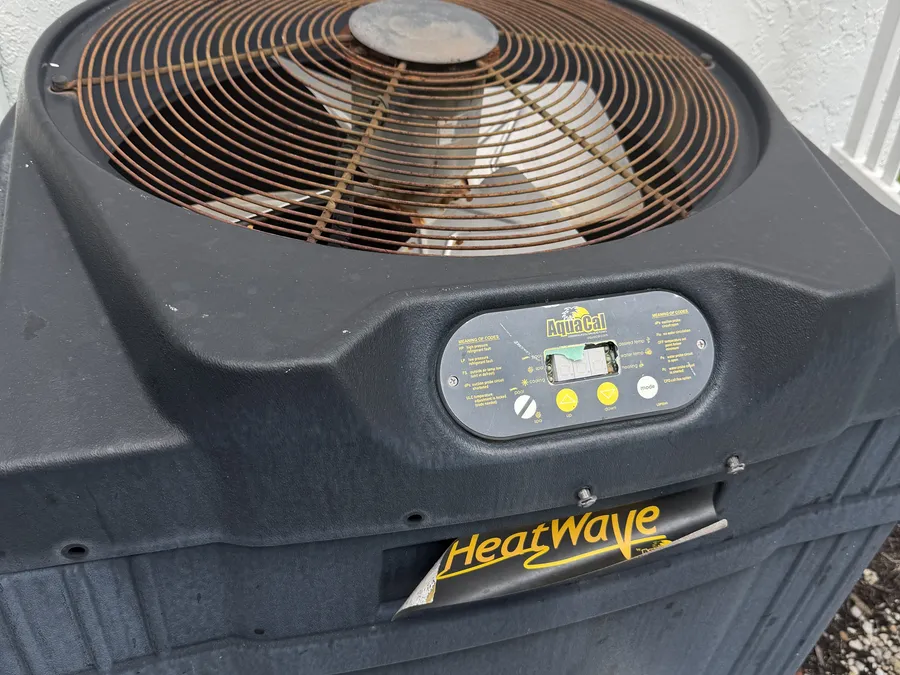
The repair-vs-replace decision matrix
Before you spend a dollar, run the situation through this. Age and repair-cost-as-a-percentage-of-replacement decide it almost every time.
| Situation | Verdict | Why |
|---|---|---|
| Under 7 yrs, isolated part (sensor, igniter, relay, flow switch) | Repair | Cheap fix, plenty of life left |
| Under 10 yrs, repair under ~30% of a new unit | Repair | Math favors keeping it |
| Any age, heat exchanger or compressor failed ($4K–$5K) | Replace | You're within $1K–$2K of a brand-new heater |
| 10–15 yrs, repair over ~40% of replacement | Replace | Next failure is 1–3 yrs out; newer units are far more efficient |
| 15+ yrs, any failure | Replace | Old copper heat exchangers can etch out and stop being safe for the water |
| Oceanfront / salt-air corridor, 8+ yrs, visible corrosion | Replace | Salt air shortens life; a second repair rarely pays back |
The short version: small electrical and flow parts are worth fixing on a younger heater. The two big-ticket internals — the heat exchanger and the compressor — are where repair stops making sense, because at $4,000–$5,000 you're a short step from a new unit with a fresh warranty.
2026 South Florida heater cost reference
Real numbers we quote across the Boca Raton–Delray–Fort Lauderdale corridor. Every repair is diagnosed first and quoted in writing before any part is ordered.
| Work | 2026 cost | Notes |
|---|---|---|
| Diagnostic visit (non-client) | $0–$125 | Free for weekly-route clients |
| Heater repair (gas or heat pump) | $250–$1,800 | Sensor, igniter, relay, flow switch, gas valve, control board |
| Heat exchanger replacement | $4,000–$5,000 | Usually the replace trigger |
| Compressor replacement (heat pump) | $4,000–$5,000 | Usually the replace trigger |
| New heater installed | $5,000–$7,000 | Right-sized heat pump or gas unit, full warranty |
| Annual heater cleaning / tune-up | $150–$350 | Open the housing, clear debris, protect the exchanger |
For the brand-specific fault codes behind a no-heat call, our techs work from the same field references we publish free: Raypak error codes, the Pentair MasterTemp 400 codes, and AquaCal heat-pump troubleshooting. A surprising share of “dead heater” calls trace back to one cheap thing — see the next section.
Before you pay for anything: the dirty-filter trap
Nine times out of ten, a heater that won't fire isn't broken — it's starved. A clogged filter chokes off water flow, and almost every heater needs proper flow to ignite and stay running. The first thing a good tech does is pull the filter cartridge and run the system. If the heater fires, you just “repaired” it for the price of a filter rinse. The two error codes we see most — a flow fault (often a code in the 100s) and HP / high-pressure — both routinely trace back to the filter. The full diagnostic walk is in our pool heater troubleshooting reference. If you pay a company to “repair” a heater and they never touched the filter, get a second opinion.
Hayward pool heater repair: the codes we see most
Hayward is one of the most common heaters on Boca Raton pads, in two families — the Universal H-Series gas heater (H150–H400) and the HeatPro heat pump. The short version: LO is low flow, IF is a failed light-off, IO is an open igniter circuit, HS is a high-limit trip, SF is a sensor fault, and on a HeatPro LP/HP are refrigerant-pressure faults that are usually a dirty coil or a flow problem rather than lost refrigerant. Every one of them starts the same way: pull the filter and verify flow before buying a part.
The full code table, the field fix for each, and what the repairs actually cost is in our Hayward heater error-code reference.
Operating cost: gas vs. heat pump vs. electric vs. solar
Repair cost is only half the picture. What a heater costs to run should drive a replacement decision too. This is the short cost view; the full technical comparison lives in our pool heaters library guide.
| Type | Cost to run | Best for in South Florida | Catch |
|---|---|---|---|
| Heat pump | Lowest, most consistent | Most pools — warm enough year-round here to be far more efficient than gas | Loses output in a cold snap |
| Gas | Highest per hour, fastest heat | Spas / hot tubs, occasional fast heat-up, any weather | Expensive to run continuously |
| Electric resistance | Very high | Rarely the right call here | Salt air destroys them; pricey to run |
| Solar | Cheapest to run | Budget heating if the roof allows | Can leak onto / damage the roof; may void roof warranty |
For most South Florida homeowners replacing a dead heater, a right-sized heat pump is the lowest lifetime cost. Gas earns its keep when you have a spa or you want the pool hot in a hurry.
The $10,000 mistake: bad install, not bad luck
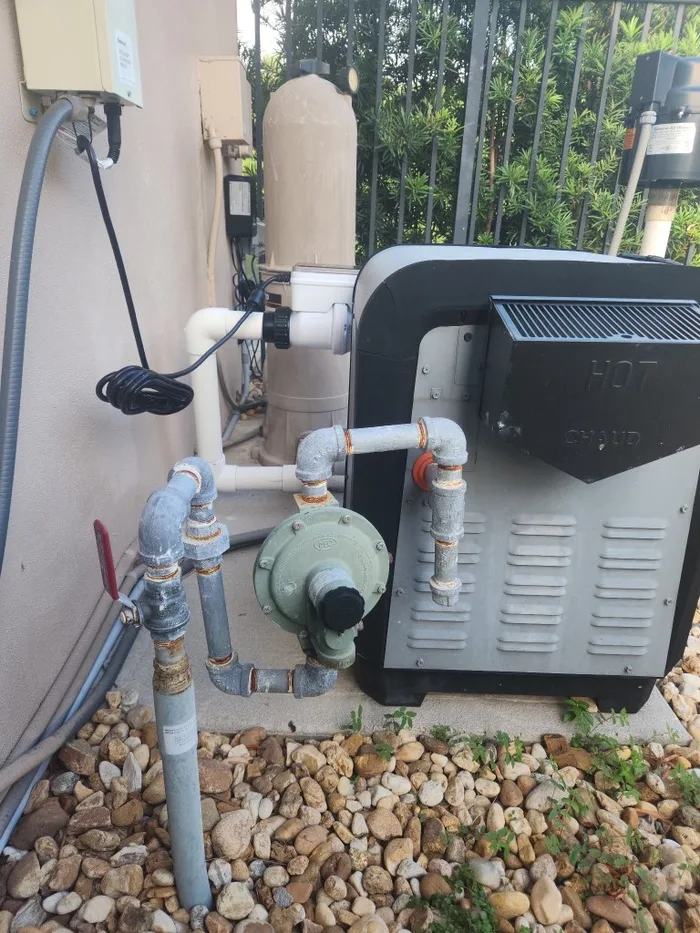
This is the part the cost tables miss, and it's the one that gets under my skin most, because I see it every week in the field. The most expensive heater failures in South Florida aren't worn-out parts — they're wrong sizing and bad plumbing baked in at install. Most heaters around here are oversized “for show,” which just wastes electricity, because a heater's performance depends on flow rate, not raw size.
The killer is the diverter valve. There's a diverter installed in front of most heaters for a reason: to send excess water around the unit. A 3-inch line forcing water into a 2-inch heater rated for ~70 gallons per minute will swell and blow the heat exchanger. We've walked up to pools where the previous company ran that diverter closed, jamming too much water through the heater. The result on one we saw:
- The pump filled with air and ran loud — the homeowner had been told “it always does that”
- A brand-new pump blew out inside a year — a $3,000 replacement
- The heat exchanger was on track to fail next — a ~$6,500 heater
Roughly $10,000 in damage from one valve left in the wrong position. I've been called out to clean up the aftermath of that exact mistake more times than I can count, and it's almost always avoidable. The fix here cost nothing: open the valve while the system runs. The lesson is the cost lesson of this whole article — how a heater is installed and plumbed decides whether it lasts 10 to 15 years or dies in a year.
The other silent budget-killer: water chemistry
With good chemistry and a yearly cleaning, a heater can last 10–15 years. With bad chemistry, you can be buying a new one every 2–3 years. The mechanism is simple and it cuts both ways:
| Chemistry problem | What it does to the heater | Cost outcome |
|---|---|---|
| Too acidic (low pH) | Burns / etches the inside of the heat exchanger | Premature exchanger failure ($4K–$5K) |
| Too basic (high pH / high calcium) | Calcium scales up and closes off the pipe | Flow loss, overheating, exchanger failure |
| Balanced | Nothing — the metal stays clean | 10–15 year heater life |
This is why balanced water is the cheapest heater insurance there is. Calcium scale and pH swings are the two we watch hardest in our hard South Florida water — the detail is in our calcium hardness reference. A heater on a well-run weekly service almost never becomes a surprise replacement.
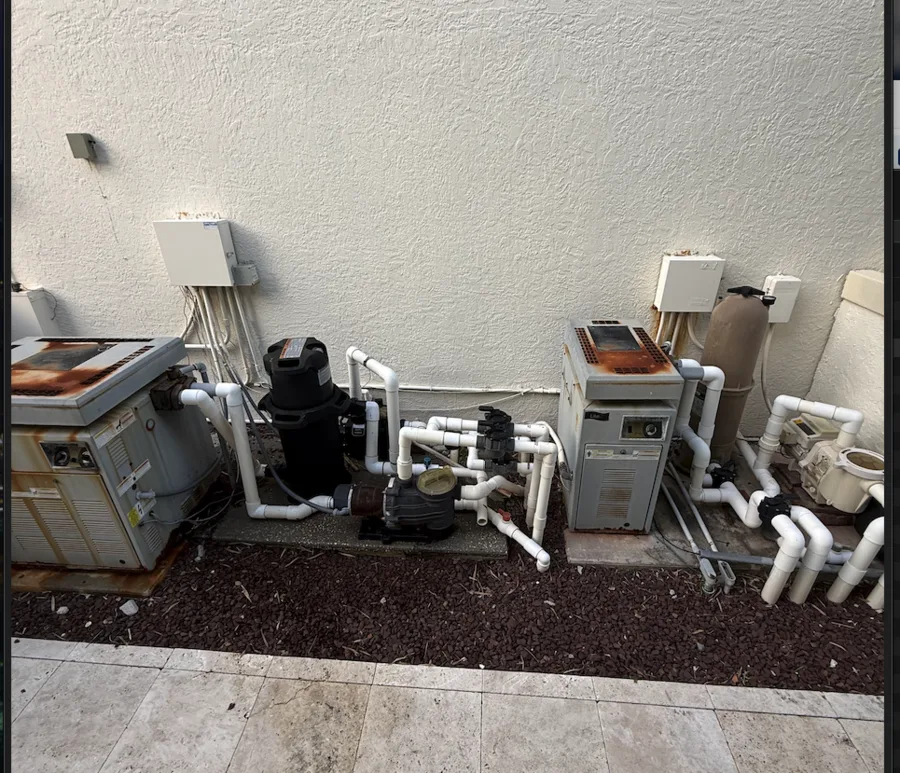
When repair makes sense
- The heater is under ~10 years old
- The failure is one isolated part — sensor, igniter, relay, flow switch, gas valve
- The repair quote is under ~30% of a new unit
- Water chemistry has been kept balanced (the exchanger isn't etched or scaled)
- No corrosion history from salt air
When replacement makes sense
- The heater is 15+ years old, regardless of the failure
- The heat exchanger or compressor has failed ($4K–$5K to fix)
- The repair quote exceeds ~50% of replacement
- It's the second repair on the same heater in two years
- It's an electric-resistance unit in a coastal home — a heat pump will cost far less to run
- You can physically see it leaking from the unit (shut the pump off and call a pro)
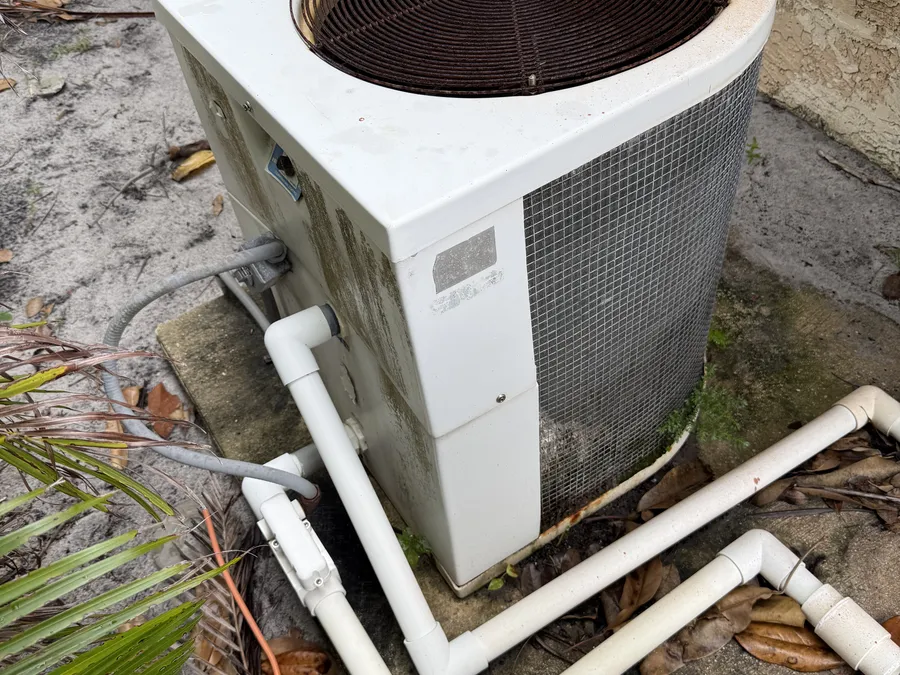
What a replacement costs, and what's in the number
A new pool heater runs about $5,000–$7,000 installed in 2026, heat pump or gas, and that price should include removing the old unit, setting the new one, plumbing it in the right order with the flow it needs, startup, and registering the manufacturer warranty. Two things are priced separately when your pad needs them: a new gas line and a new electrical circuit. A like-for-like swap on an existing pad avoids both.
Size is where the money gets wasted. A heater that's too small never catches up in January; one oversized for show costs more to buy and run. Get a ballpark with our pool heater size calculator, then have the size confirmed on site against your pump and plumbing. When you're ready, our pool heater installation and replacement page lays out how we size, install, and verify a new unit.
Get a number for your pool
Want a ballpark before anyone comes out? Run your pool through our pool service cost calculator — it asks the same questions we'd ask on a walk-through. Replacing the heater? The pool heater size calculator shows the BTU your pool needs. And if you already know you need hands on the equipment, our pool heater repair service page lays out exactly what a diagnostic visit covers. If the heater is in Boca Raton, start with our page on pool heater repair in Boca Raton.
The low-risk first step
Whether you lean repair or replace, the lowest-risk first step is a free on-site evaluation. We'll check flow and the filter first, read the error code, test your water on site, and tell you honestly whether you're looking at a $250 part or a $6,000 decision — whether you hire us or not.
Florida's Best Pool Service is family-owned, CPO C-105377, fully insured, and runs weekly routes through Boca Raton, Delray Beach, Fort Lauderdale, Highland Beach, Boynton Beach, Pompano Beach, Lighthouse Point, Coral Springs, Coconut Creek, Wellington, and the surrounding South Florida corridor. Your regular tech, same day every week, once your route is established. Photo-documented service report after every visit. Month-to-month — no long-term lock-in. Built around 40+ years of combined founder experience between Matt Balog, Joe Ford, Ronald Liddell, and Doug Santiago.
Ready to have a heater looked at? Book heater service for a heater diagnostic and a written quote before any work.
Heater visits in Boca's gated communities follow the same gate and HOA vendor rules as weekly service. Our Boca Raton neighborhood guide explains how we handle them.
Request a free evaluation or call 954-347-1120.
Frequently Asked Questions
Most pool heater repairs in Boca Raton run $250–$1,800 for gas or heat-pump units — covering parts like sensors, igniters, relays, flow switches, gas valves, and control boards, diagnosed and quoted in writing first. The cost jumps when a major internal fails: a new heat exchanger or compressor runs $4,000–$5,000, and at that point a whole new heater ($5,000–$7,000) is usually the smarter spend. A non-client diagnostic visit runs $0–$125 and is free for weekly-route clients. The same pricing holds across the surrounding South Florida corridor — Delray Beach, Highland Beach, Boynton Beach, and Fort Lauderdale.
Repair if the heater is under about 10 years old, the failure is an isolated part, the quote is under ~30% of a new unit, and the water has been kept balanced. Replace if it's 15+ years old, the heat exchanger or compressor has failed ($4,000–$5,000), the repair quote exceeds ~50% of replacement, it's the second repair in two years, or you can see it leaking from the unit. A repair on a heater older than about 10 years is usually a bad investment — newer units are far more efficient.
Nine times out of ten it's a dirty filter starving the heater of flow — almost every heater needs proper water flow to ignite and stay running, so the first step is pulling the filter cartridge and running the system. The two most common error codes, a flow fault (often a code in the 100s) and HP/high-pressure, both routinely trace back to the filter. In a cold snap, a heat pump can also stop heating because it pulls warmth from the air; a gas heater still works in cold weather.
A new heater installed runs about $5,000–$7,000 in 2026 for a right-sized heat pump or gas unit with full manufacturer warranty. Because a heat exchanger or compressor replacement alone runs $4,000–$5,000, replacing the whole unit is often only $1,000–$2,000 more than fixing a major internal — which is why a big-component failure is usually the trigger to replace rather than repair.
A new heater runs about $5,000–$7,000 installed in 2026, heat pump or gas. That should cover removing the old unit, setting and plumbing the new one with the flow it needs, startup, and warranty registration. A new gas line or a new electrical circuit is priced separately when the pad needs one, and a like-for-like swap on an existing pad avoids both.
A heat pump is the lowest, most consistent cost to run for most South Florida pools because it's warm enough year-round here to be far more efficient than gas — its only weakness is losing output during a cold snap. Gas costs the most per hour but heats fastest and works in any weather, making it the right choice for spas and occasional fast heat-up. Electric-resistance heaters are very expensive to run and salt air destroys them. Solar is the cheapest to run but can leak onto and damage your roof and may void a roof warranty.
Yes — the $250–$1,800 band covers the common electrical and flow-related parts: temperature sensors, igniters, flame sensors, relays, flow switches, gas valves, and control boards. What pushes a heater out of repair territory is a failed heat exchanger or compressor at $4,000–$5,000. We always diagnose first and quote the exact part in writing before ordering anything, so you know which side of that line you're on before you commit.
Enormously. With balanced water and a yearly cleaning a heater can last 10–15 years; with bad chemistry you can be replacing one every 2–3 years. Water that's too acidic burns and etches the inside of the heat exchanger; water that's too basic or high in calcium scales up and closes off the pipe, causing flow loss and overheating. Balanced water keeps the metal clean and is the cheapest heater insurance there is — which is why a heater on a well-run weekly service rarely becomes a surprise replacement.
Absolutely — bad sizing and plumbing are the most expensive heater problems in South Florida. Heaters here are often oversized, which only wastes electricity, because performance depends on flow rate, not raw size. The bigger danger is the diverter valve in front of the heater: it exists to send excess water around the unit, and if it's run closed, a 3-inch line can force too much water through a 2-inch heater rated for ~70 GPM and blow the heat exchanger. We've seen one closed valve cause a $3,000 pump failure and set up a ~$6,500 heater failure — about $10,000 in damage that opening one valve would have prevented.
On a Hayward Universal H-Series gas heater: LO means low water flow — the pressure switch is open, almost always a dirty filter or a closed valve, so clean the filter first ($250–$500 if it's the switch). IF is ignition failure with no flame proven and IO is an open igniter circuit, usually the igniter and its wiring, the flame sensor, or the gas valve ($300–$900). HS is the high-limit trip from overheating, often caused by low flow or a scaled heat exchanger ($250–$600). SF is a temperature/stack sensor fault ($250–$450). On the Hayward HeatPro heat pump, LP/HP are low/high refrigerant pressure (HP is frequently a dirty coil or flow problem), and a unit that quits below ~50°F is normal cold-snap behavior, not a failure. With any Hayward code, verify flow before buying a part.
Yes — all major brands across heat pumps, gas heaters, and solar: Hayward, Raypak, Pentair, AquaCal, Jandy, and more. Error codes vary by brand but the common flow and high-pressure faults frequently trace back to the filter. We diagnose the specific brand and model, read the fault code, verify flow, and quote the exact part in writing. Once you approve the cost, we make the repair under our CPC license.
Need a pro to handle this?
Florida's Best Pool Service has serviced South Florida homes for 40+ years. CPO-licensed. Fully insured. 230+ five-star reviews.