
I run a pool service company in Boca Raton. I also hold a Public Adjuster 3-20 license, which means I work on the claims side too. So I see this from both angles — the equipment damage that triggers a claim, and the documentation battle that follows. Most South Florida pool owners learn what their policy actually covers the day after a storm. By then it's too late to fix the gaps that cost them tens of thousands.
Here's what you should know now, before the next hurricane season or surge event makes you find out the hard way.
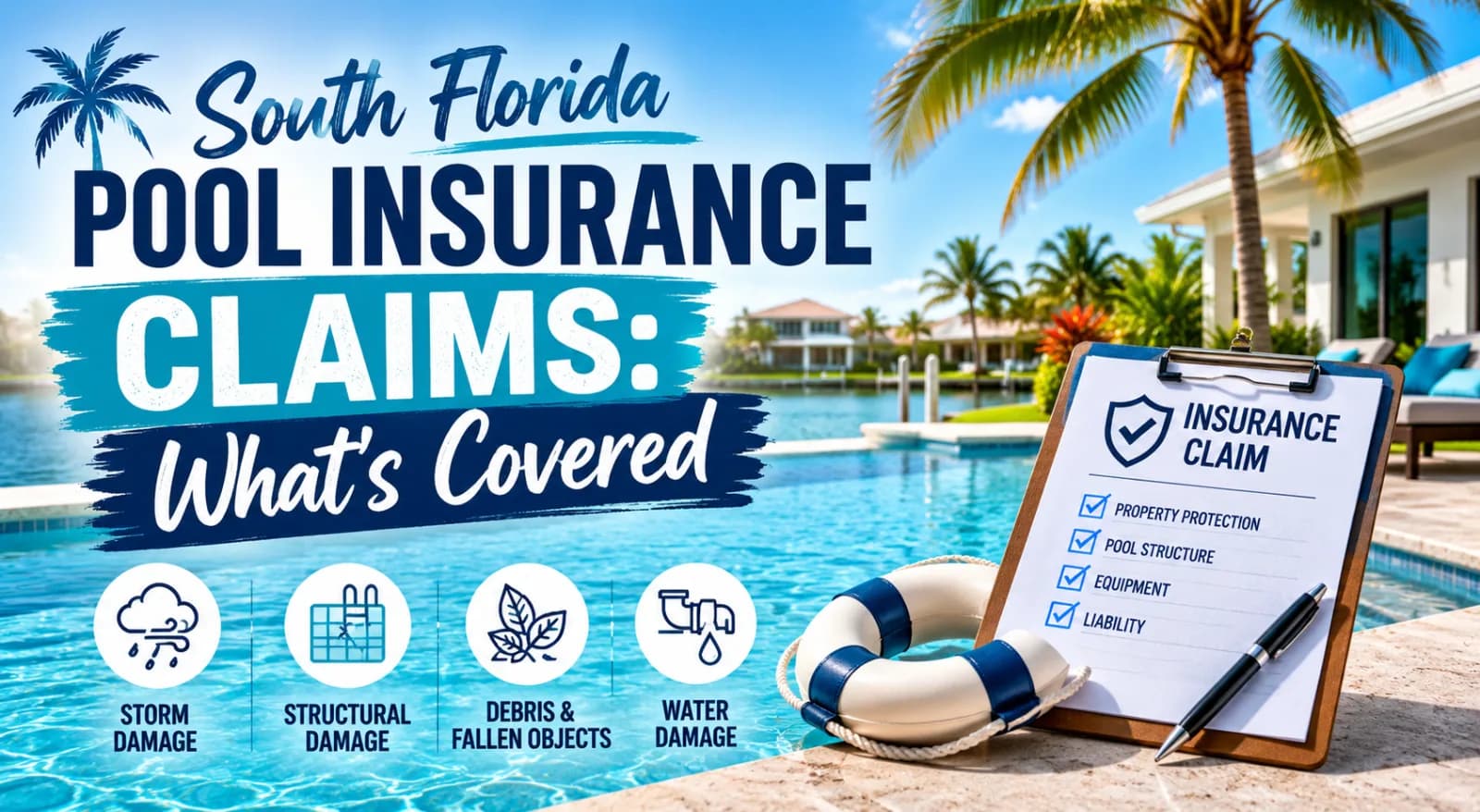
What your homeowners policy actually covers on your pool
Most standard Florida homeowners policies treat in-ground pools as part of the property — but not the same way they treat the house itself. The pool falls under what's called “other structures” coverage, which is usually capped at 10% of your dwelling coverage limit.
That cap matters. If your home is insured at $750,000, your other structures limit is typically $75,000. That has to cover the pool, the screen enclosure, the equipment pad, the deck, any detached shed, and the fence. If a hurricane takes out the screen enclosure ($25,000), damages the pump and salt cell ($4,500), and cracks the deck ($15,000), you're already at $44,500 of your $75,000 cap — and you haven't touched the actual pool structure yet.
Covered perils for the pool typically include: windstorm, hurricane, hail, fire, lightning, vandalism, and theft of equipment. Standard exclusions: wear and tear, gradual leaks, neglect, freezing damage (rarely relevant in South Florida), and earth movement.
For an instant pricing toolon weekly service that includes the documentation we're about to talk about, you can run your pool's numbers in 60 seconds.
“Other structures” is where your pool lives — and the limit matters more than most owners realize
Before any storm, pull out your declarations page and find the Other Structures limit. If it reads less than 10% of dwelling, ask your agent if you can raise it. Many carriers allow up to 20% as an endorsement for a modest premium increase, and for South Florida pool owners with screen enclosures, that buffer often pays for itself in a single claim.
I've sat in living rooms after Hurricane Ian and after Idalia explaining to homeowners that their pool damage exceeded their Other Structures limit. They were stunned. “I thought I had full coverage.” They did — for the house. The pool just wasn't budgeted in the same way. That conversation is preventable for $40–$80 a year in premium.
If your pool, screen, and equipment together are worth more than 10% of your dwelling coverage — and in Boca/Delray they usually are — you're under-insured by default. Check before storm season.
Hurricane wind vs. flood vs. surge: three different claims, three different paths
This is where most claims go sideways. Three different damage causes from one storm get treated three different ways by your insurance:
Wind damage— debris through the screen, screen frame collapse, equipment shifted or damaged by flying objects, lightning to electronics. Covered under your standard homeowners policy, subject to your hurricane deductible (typically 2–5% of dwelling coverage in Florida, separate from your standard all-other-perils deductible).
Flood damage — pool overflowing with contaminated water, equipment submerged by storm surge or rising water, pad flooded by rising groundwater. Not coveredunder standard homeowners. You need a separate flood policy, usually through the National Flood Insurance Program (NFIP) or a private flood carrier. Most South Florida pool owners don't have flood coverage on their pool.
Power surge damage— pump motor fried when power restored, salt cell controller damaged, heater electronics destroyed. Covered under homeowners as an insured peril, but often subject to lower sub-limits for electronics. Check your policy for “electronic equipment” sub-limits before filing.
The mistake homeowners make: filing one claim for “hurricane damage” without separating the three causes. When you do that, the carrier classifies the whole claim under whichever path is cheapest for them — usually flood-adjacent, which gets your wind-damaged equipment underpaid or denied entirely.
The right move: document each damage type separately with cause-specific photos and dates. Pump dead from surge needs to be documented and claimed differently from screen torn by wind. Same storm, two separate line items.
Lightning damage: the unsung South Florida pool loss
South Florida averages 70–100 lightning days per year — among the highest in the United States. Pool equipment is one of the most common targets because it sits outdoors with electronic controllers, salt cells, and pump motors that are sensitive to voltage spikes.
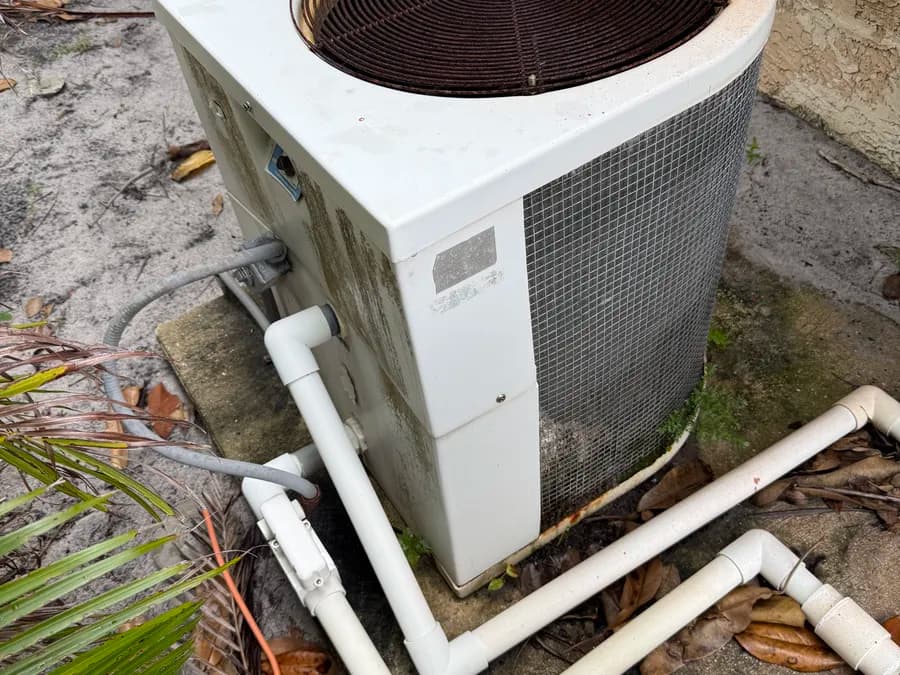
What we see on the route after a strike: dead pump motor, fried salt cell controller, blown heater ignition board, sometimes a damaged automation panel. Direct strikes can take all four out simultaneously. Near-miss strikes (lightning to a nearby tree or power line) typically take out one or two components via induced surge.
Lightning claims are usually approved quickly because the damage pattern is obvious to any adjuster — burn marks, scorch patterns, simultaneous component failure. The documentation that matters: photos of the damaged components with date stamps, a service report from your pool company confirming the equipment was functioning before the event, and ideally a power-outage record from FPL confirming the area lost power around the same time.
Most lightning claims I've seen fall in the $2,500–$8,000 range for residential equipment. If you have automation, salt system, and a heater, a direct strike can push you to $15,000+ in single-event equipment replacement.
For the corrosion side of South Florida equipment damage — coastal salt air, not lightning — see our salt-air equipment damage breakdown.
Screen enclosure collapse: usually covered, almost always under-claimed
This is the loss category I see under-claimed most often. After a major storm, screen enclosures take a beating — torn panels, bent frames, occasionally full collapse. Owners file for the obvious damage (broken panels, snapped supports) and don't realize that:
- Damaged framing affects the structural integrity of the entire enclosure
- A partially compromised screen pad is no longer to-code and may require full replacement to pass permit
- Code upgrades since installation may require the entire structure be brought up to current standards (Florida Building Code now requires higher wind-load ratings in most coastal counties)
- The screen door, hardware, and any attached electrical (lighting, fans) are part of the claim
Full screen enclosure replacement on a typical Boca/Delray pool runs $18,000–$45,000 depending on size and structural complexity. Owners who file only for panel replacement get a $3,000 settlement and pay the rest out of pocket six months later when the frame fails its next inspection.
File for the entire scope of damage, not just the visible panels. Get a qualified screen contractor to assess the full structural impact before submitting.
Equipment damage from power surges and outages
Beyond direct lightning, South Florida pool equipment takes damage from:
- Power surges when grid power restores after an outage — the inrush voltage spike can kill pump motors and controllers
- Brownouts during peak summer load — undervoltage damages variable-speed pump motors
- Lightning to nearby infrastructure that induces surge through the wiring
- Generator switchover events — improper transfer can spike equipment
These claims are technically covered under homeowners policy electronic equipment coverage, but they're often paid at lower sub-limits than you'd expect. If your policy has a $5,000 electronic equipment cap and your variable-speed pump + automation + salt system together cost $7,500 to replace, you're $2,500 out of pocket on a “covered” claim.
Mitigation that insurance carriers reward:whole-house surge protection at the panel, surge protectors at the equipment pad, and a documented inspection of grounding and bonding. Some carriers offer 5–15% premium discounts for documented surge mitigation.
Leaks: when covered, when denied, and what the carrier looks for
This is the most-disputed claim category. The general rule:
- Leak caused by a sudden, accidental, covered event (tree fell on pool, vandalism, lightning crack) → usually covered
- Slow leak from age, wear, or shifting ground → not covered
- Leak from plumbing failure → depends on policy — some cover sudden plumbing breaks, most exclude gradual
What carriers look for when evaluating a leak claim:
- Date the leak was first observed (the longer it ran, the more likely the carrier classifies it as “gradual”)
- Service records showing the pool was being maintained at the time of loss
- Cause-of-loss documentation — leak detection report, plumbing inspection, structural assessment
- Whether the leak coincided with a covered event
Owners who can produce weekly service records showing the pool was in normal operating condition the week before the leak appeared have a much stronger claim than owners who can't account for the prior 6 months of maintenance.
What your pool service company's records actually do during a claim
This is the practical advice most insurance content skips. Your pool service company's documentation — if they do it properly — is your insurance evidence in a claim. For the full year-round cadence of what to log, photograph, and keep on file, see our technical reference, Insurance and Documentation for Weather Claims.
What carriers want to see:
- Photo-documented service reports from the weeks leading up to the loss, showing equipment was operational
- Chemistry logs demonstrating the pool was being actively maintained
- Equipment inspection notes showing components were inspected on a regular schedule
- Repair history distinguishing between pre-existing conditions and new damage
When a carrier's adjuster suspects neglect, they request these records. If you can produce 12 months of weekly service reports with photos and chemistry data, the neglect angle dies fast. If your pool service company doesn't generate records — or only generates a paper slip you can't find — you're vulnerable.
This is one of the practical reasons we photo-document every service visitand keep digital records for every customer. It's not just a quality-control thing. It's claim protection. If you're not getting records from your current pool service, ask why. The day after a hurricane is the wrong time to find out.
You can verify our credentials and licensing and run the 60-second cost calculatorfor service that includes the documentation we're describing.
The deductible math: when filing makes sense and when it doesn't
Florida policies typically have two deductibles:
- All-Other-Perils (AOP) deductible — flat dollar amount, usually $1,000–$5,000
- Hurricane deductible — percentage of dwelling coverage, typically 2–5%, only applies to named storms
For a home with $750,000 dwelling coverage and a 3% hurricane deductible, your hurricane deductible is $22,500. That means hurricane pool damage below $22,500 — which is most pool damage from a marginal storm — comes out of your pocket entirely.
File when: total damage clearly exceeds your applicable deductible, you have documentation, and the loss is from a covered event. Don't file when:damage is below deductible, cause-of-loss is unclear, or the loss timing doesn't align with a covered event.
A filed-and-denied claim still appears on your CLUE (insurance claim history) report and can affect future premiums. Don't file marginal claims unless they're substantial.
For prep that reduces both damage and post-event claim friction, see our hurricane prep protocol.
When to call a public adjuster (and what the 1-year deadline really means)
Public adjusters represent the policyholder (you) in negotiating with the insurance company. They're licensed by the Florida Department of Financial Services and typically work on contingency — taking a percentage (usually 10–20%) of the settlement.
When a public adjuster is worth it:
- Claim is over $25,000–$50,000 total
- Carrier has denied or underpaid the initial claim
- Damage is complex (multiple causes, mixed coverage types)
- You're not getting clear answers from the carrier's adjuster
When you probably don't need one:
- Claim is straightforward and under your AOP deductible
- Damage cause is obvious and well-documented
- Carrier's initial offer is at or near actual replacement cost
The deadline that catches people: Florida law gives you 1 year from the date of loss to file a property insurance claim and 18 months for supplemental claims (when additional damage is discovered during repair). After a major hurricane, supplemental damage is common — you fix the pump only to find the controller is also fried, or the screen replacement reveals hidden frame damage. File the initial claim quickly, and stay within the 18-month window for any supplemental discoveries.
I hold a Florida Public Adjuster 3-20 license (#W026874) through Dolphin Claims, so I work on these claims professionally as a separate part of my work. If your claim is complex and you'd like to talk through whether you need representation, the contact form is the cleanest way to start. If you just have a pool service question, the instant pricing tool returns a number in 60 seconds.
Common questions
Does my Florida homeowners insurance automatically cover my pool?
Most standard policies include in-ground pools under “other structures” coverage. But you should verify two things: that your carrier knows you have a pool (some carriers require disclosure at policy issuance), and that your Other Structures limit is sufficient to cover the pool + screen + equipment + deck combined. Above-ground pools may require a separate endorsement.
What's the difference between hurricane deductible and standard deductible for pool damage?
The standard All-Other-Perils (AOP) deductible is a flat dollar amount applied to most claims — typically $1,000–$5,000. The hurricane deductible is a percentage of dwelling coverage — typically 2–5% — applied only to damage from named storms. For a $750,000 home with a 3% hurricane deductible, that's $22,500 out of pocket on storm damage before insurance pays anything.
How long do I have to file a pool damage claim after a hurricane in Florida?
1 year from the date of loss for the initial claim. 18 months for supplemental claims when additional damage is discovered during repair. File the initial claim quickly even if you're still assessing damage — you can always add to it within the supplemental window.
Will the insurance company ask for proof my pool was maintained?
Often, yes — especially when the claim involves equipment failure or leaks that could be argued as gradual rather than sudden. Weekly service records, chemistry logs, and photo-documented equipment inspections are the evidence that defeats the “neglect” defense. If your current pool service doesn't generate these records, ask why before the next storm.
Should I file a claim for under $5,000 in pool damage?
Usually not. A filed claim — even if denied or paid below the threshold — appears on your CLUE report and can raise future premiums. Pay smaller losses out of pocket and reserve your filings for damage that clearly exceeds your deductible.
Want pool service that includes the documentation your insurance carrier wants?
Most pool service companies don't generate photo records or chemistry logs. We do — for every visit, for every customer. It's not just about doing the job right. It's about giving you the evidence that protects you when a claim comes up.
Run our instant pricing tool — 60 seconds for a real number on your pool. No phone call, no qualification gauntlet.
Have a question the calculator doesn't cover? Text us at (954) 347-1120 — we usually reply within a few hours.
— Joe
Joe Ford is co-owner of Florida's Best Pool Service, serving Boca Raton, Delray Beach, and surrounding South Florida communities. The company is CPO-certified (C-105377), fully licensed and insured, and an FSPA member firm. Joe also holds a Florida Public Adjuster 3-20 license (#W026874) through Dolphin Claims and works claims professionally. Verify both at our credentials page. This article is general information, not legal or insurance advice — consult your carrier and a licensed professional for your specific situation.
Frequently Asked Questions
Most standard policies include in-ground pools under 'other structures' coverage. Verify two things: that your carrier knows you have a pool (some require disclosure at issuance), and that your Other Structures limit is sufficient to cover the pool + screen + equipment + deck combined. Above-ground pools may require a separate endorsement.
The standard All-Other-Perils (AOP) deductible is a flat dollar amount, typically $1,000–$5,000. The hurricane deductible is a percentage of dwelling coverage — typically 2–5% — applied only to named storms. For a $750,000 home with a 3% hurricane deductible, that's $22,500 out of pocket on storm damage before insurance pays.
1 year from the date of loss for the initial claim, and 18 months for supplemental claims when additional damage is discovered during repair. File the initial claim quickly even if you're still assessing damage — you can add to it within the supplemental window.
Often, yes — especially when the claim involves equipment failure or leaks that could be argued as gradual rather than sudden. Weekly service records, chemistry logs, and photo-documented equipment inspections defeat the 'neglect' defense.
Usually not. A filed claim — even if denied or paid below the threshold — appears on your CLUE report and can raise future premiums. Pay smaller losses out of pocket and reserve filings for damage that clearly exceeds your deductible.
Need a pro to handle this?
Florida's Best Pool Service has serviced South Florida homes for 40+ years. CPO-licensed. Fully insured. 230+ five-star reviews.