I'm Joe Ford — co-owner of Florida's Best Pool Service and a Florida-licensed All-Lines Public Adjuster (3-20). I also founded and own Dolphin Claims, where I've personally handled 200+ hurricane insurance claims and helped settle over $50 million for homeowners and business owners across Florida. So I see both halves of every storm: the pool that has to get through it, and the claim that has to get paid afterward. This guide covers both — how to prep the pool so it survives, and how to document it so the insurance side doesn't become a second disaster.
Done right, your pool rides out the storm and bounces back within a week. Done wrong, you're facing cracked plaster, blown-out equipment, weeks of green-water recovery— and a denied claim because nobody documented the “before.”
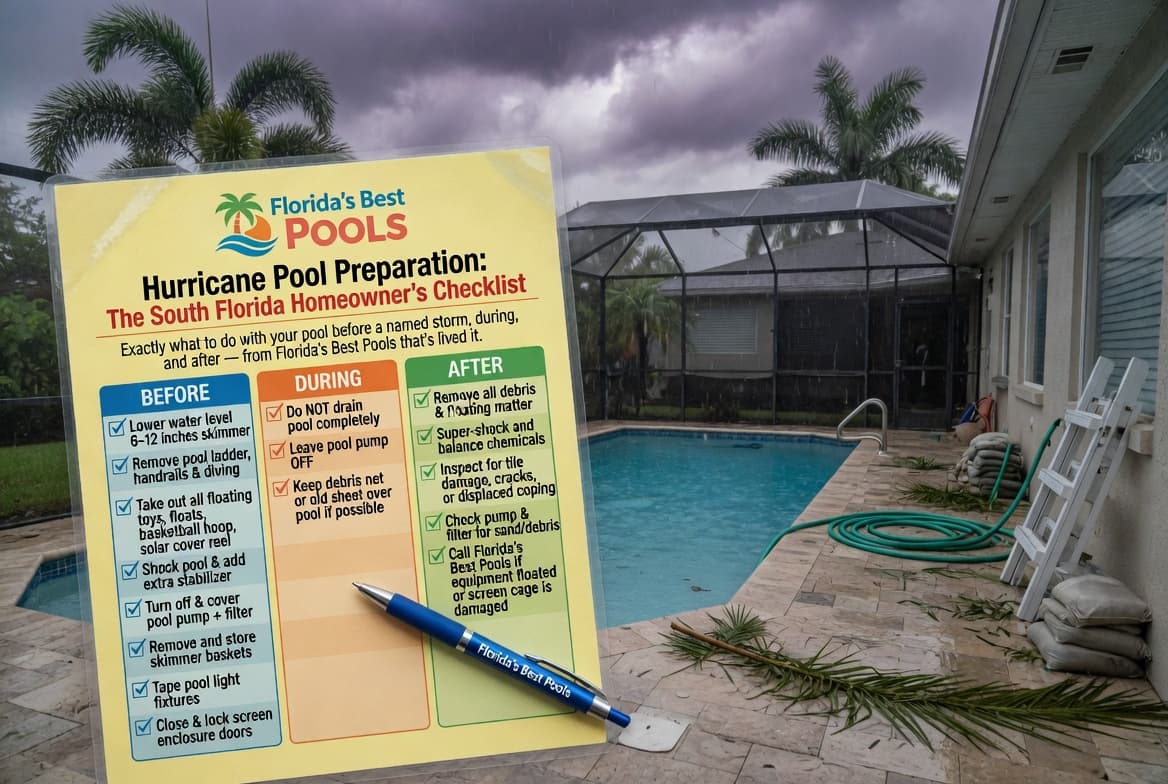
48–72 hours before the storm
- Shock the pool to 10 ppm free chlorine. This buys you buffer to handle debris and organic load.
- Balance pH and alkalinity to the middle of the ideal range.
- Add an algaecide at maintenance dose.
- Backwash the filter so it starts the storm clean.
- Run the pump heavily for 24 hours to distribute the shock.
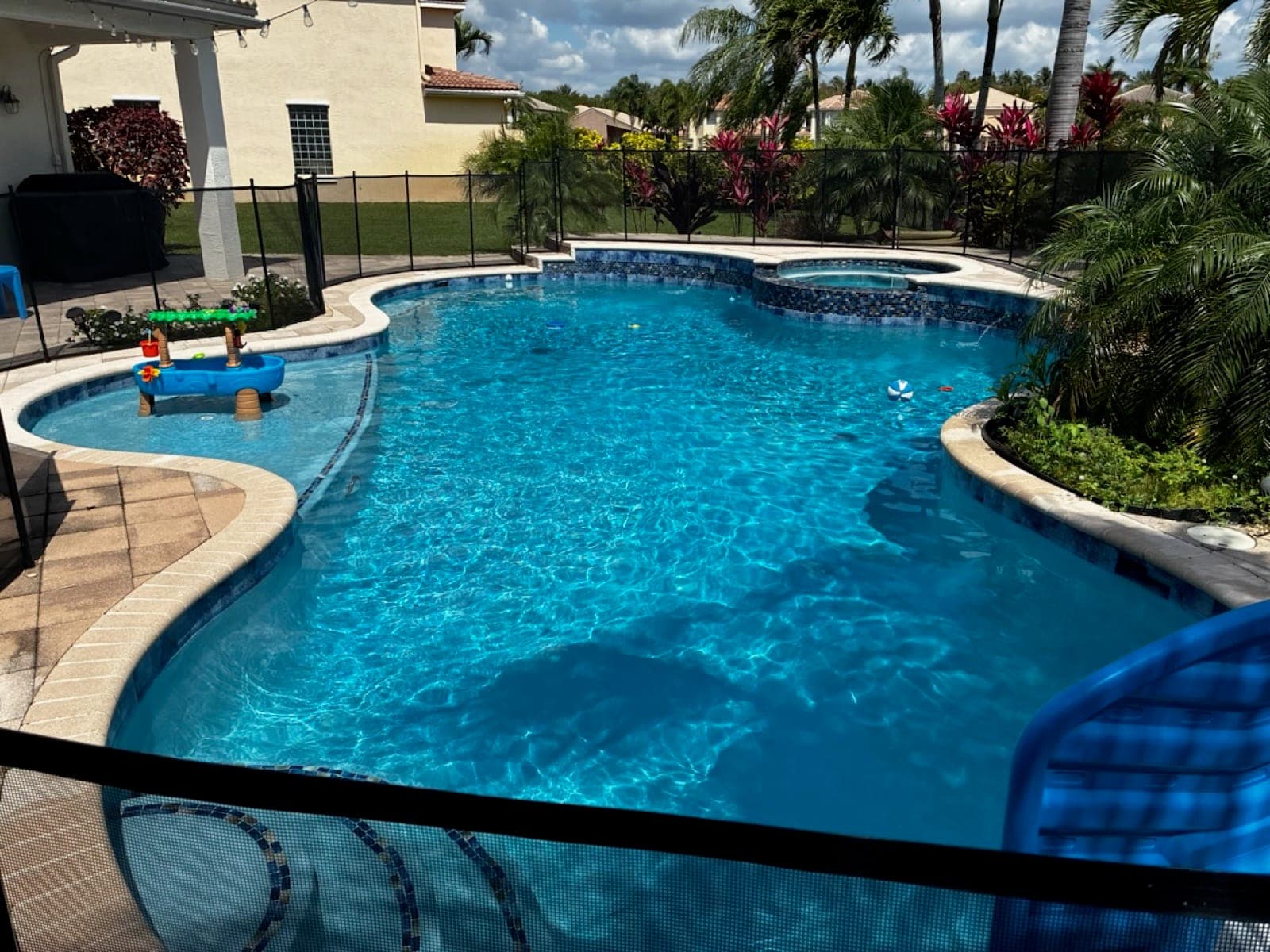
- Photograph the pool, deck, screen enclosure, and equipment pad now — clear water, intact tile, working equipment. This is your dated “before” baseline for any claim.
24 hours before landfall
- Do NOT drain the pool. A full pool is structurally safer — empty pools can pop out of the ground from groundwater pressure.
- Lower the water 6–12 inches only if you're in a flood zone.
- Remove everything loose from the deck: furniture, toys, skimmer baskets, floats. Store inside or sink it in the pool (weighted-down patio furniture actually rides out the storm safely underwater).
- Do NOT cover the pool. Covers become debris and wind-catches.
Equipment protection
- Turn off pool breakers at the electrical panel.
- Unplug timers and automation controls.
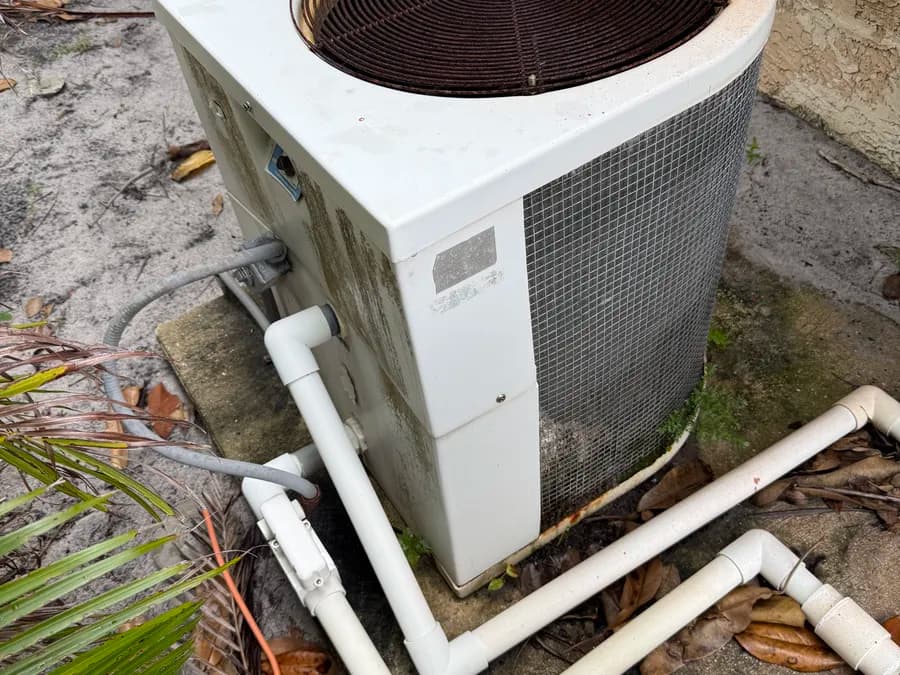
- Wrap the pump motor and heater controls in plastic and tape.
- Remove or secure salt cell and automation panels if removable.
- Don't run the pump during the storm — power fluctuations can burn motors.
After the storm
- Wait for the all-clear from the utility and local authorities before touching anything electrical.
- Photograph the damage before you clean up. Cracked tile, debris in the pool, a collapsed screen enclosure, a flooded equipment pad — date-stamped, from multiple angles. This is the single most valuable thing you can do for a claim.
- Check for structural damage to the deck, tile, and waterline before restarting equipment.
- Remove large debris by hand or net. Don't vacuum with the filter system — branches and heavy debris will wreck pump impellers.
- Test chemistry. Expect high chlorine demand, low pH, and a lot of phosphates.
- Shock again to 10+ ppm and run the filter 24/7 until the water clears.
- Restart equipment one piece at a time — pump first, check for leaks, then heater, then salt cell.
The insurance side most pool owners miss
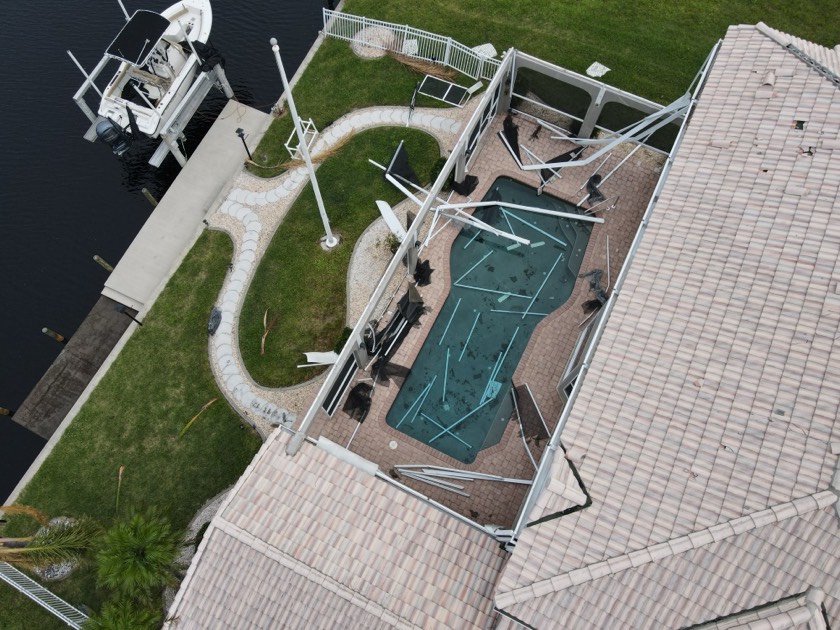
Here's where my Public Adjuster hat goes on. After a named storm, the pool damage is only half the problem — the other half is whether your insurer pays for it. Most Florida homeowner policies cover sudden and accidental damage from a covered peril: wind-driven debris that cracks tile or plaster, a screen enclosure that collapses into the pool, lightning or power-surge damage to the pump, heater, or automation. What they don't cover is gradual wear, corrosion, or neglect— and that distinction is exactly where claims get denied.
| Storm-related pool damage | Typical coverage position |
|---|---|
| Screen enclosure / cage collapse onto pool | Usually covered (wind peril); often its own coverage line |
| Wind-driven debris cracking tile, coping, or plaster | Usually covered if documented as sudden & storm-caused |
| Lightning or surge frying pump, heater, salt system, automation | Often covered — serial numbers + dated photos make the case |
| Equipment pad flooded by storm surge / rising water | Depends on flood vs. wind coverage — read the policy split carefully |
| Pool “turned green” from days without power | Cleanup sometimes covered if tied to a covered loss; argue it early |
| Salt-air corrosion, aging seals, pre-existing wear | Not covered — classified as maintenance / deterioration |
The deciding factor is almost never the damage itself — it's the documentation. A dated “before” photo showing intact tile and working equipment, paired with an “after” photo showing the storm damage, turns a “pre-existing, denied” argument into a paid claim. That's why the photo steps above aren't busywork.
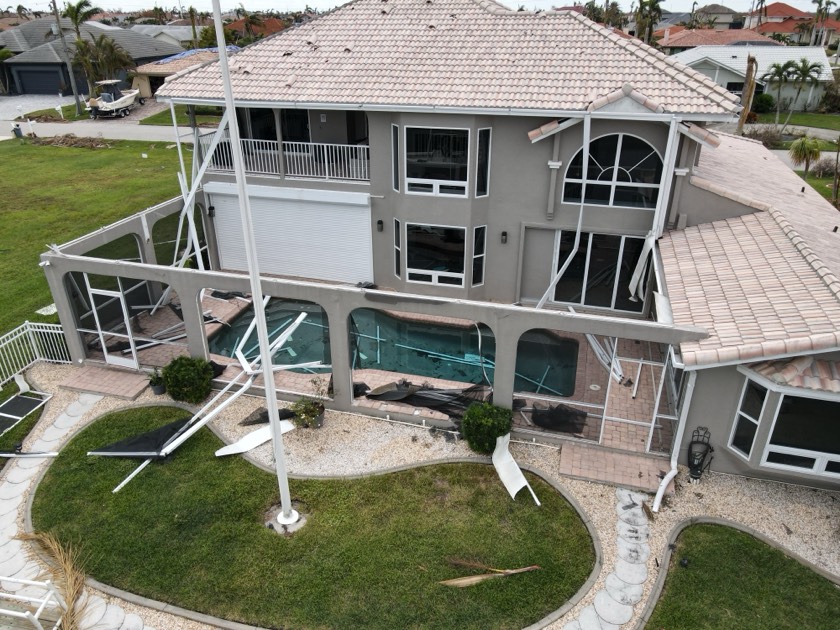
How to document your pool for a claim
- Before the storm: dated photos/video of clear water, intact tile and coping, the screen enclosure, and each piece of equipment running. Save equipment make, model, and serial numbers.
- Keep your records: recent service reports, receipts for equipment, and your CPO-serviced maintenance history all prove the pool was in good condition — the opposite of “neglect.”
- After the storm: photograph all damage before cleanup, from multiple angles, with timestamps.
- Don't throw damaged equipment away until it's documented — an adjuster may need to inspect it.
- Get a written repair estimate from a licensed pool company before you accept the insurer's first number.
Work with a public adjuster who knows the process
If your pool, enclosure, or equipment takes real storm damage, you don't have to fight the insurance company alone. At Dolphin Claims, we represent you — not the carrier. We've been awarded among the best public adjusters in Florida on several occasions because we know and understand the process of helping you maximize your claim. Many homeowners and business owners across Florida have come to us after another adjuster near them couldn't achieve the results we can — we've settled over $50 million for our clients, with fast turnaround times and an unbeatable customer-service focus. If you want reliable adjusters working for your best interest, work with us at Dolphin Claims.
Note: Florida's Best Pool Service does not provide adjusting services. Dolphin Claims is Joe Ford's separate, licensed public-adjusting firm. This article is general information, not claim-specific advice — talk to a licensed adjuster about your specific policy and loss.
When to call us about the pool
If you're not sure the equipment is safe to restart, or your pool has heavy structural debris, call us first. Hurricane pool recoveryis a specialty — we prioritize existing weekly clients and handle storm-only recoveries by request, and we'll give you the written repair estimate your claim needs.
Florida's Best Pool Service is family-owned, CPO C-105377, fully insured, and runs weekly routes through Boca Raton, Delray Beach, Fort Lauderdale, Boynton Beach, Pompano Beach, and the surrounding South Florida corridor — built around 40+ years of combined founder experience between Matt Balog, Joe Ford, Ronald Liddell, and Doug Santiago.
Request hurricane pool recovery or call 954-347-1120.
Frequently Asked Questions
No. A full pool is structurally safer — empty pools can pop out of the ground from groundwater pressure. Lower 6–12 inches only if flooding is likely.
Yes — shock to 10 ppm and balance chemistry so the pool can take debris and organic load without going green.
Turn off the breaker, unplug timers, wrap electrical components, and secure any loose items. Don't run the pump during the storm.
Often, yes — for sudden, accidental damage from a covered peril: wind-driven debris cracking tile or plaster, a collapsed screen enclosure, or lightning/surge damage to the pump, heater, or automation. Gradual wear, corrosion, and neglect are not covered. Dated before-and-after photos and equipment serial numbers are what get these claims paid.
Take dated photos of clear water, intact tile, and working equipment before the storm, and save equipment make/model/serial numbers. After the storm, photograph all damage before cleanup from multiple angles, keep damaged equipment until it's inspected, and get a written repair estimate from a licensed pool company before accepting the insurer's first offer.
Need a pro to handle this?
Florida's Best Pool Service has serviced South Florida homes for 40+ years. CPO-licensed. Fully insured. 230+ five-star reviews.