
Matt has serviced pools in the same Las Olas Isles, Harbor Beach, and Highland Beach corridors for 30 years, and the question we get most often from new clients moving in from inland is: why is my equipment failing so much faster than my old house?Salt air. That's the answer. And there's a lot a homeowner can do — and a lot a pool service should be doing — to stretch hardware lifespan in coastal South Florida.
The single biggest pattern we've seen across our coastal routes isn't equipment technology or chemistry — it's how aggressively coastal salt-air shortens the working life of what sits on the equipment pad. A pump that lasts 12 years inland fails at 7 on Las Olas Isles. A salt cell rated for 5 years gets 3 in Harbor Beach. The work isn't harder; it's just relentlessly different.
What salt air actually does to pool equipment
Coastal salt air carries chloride ions in suspension. Those ions deposit on every surface — pump housings, heater cabinets, salt cell electrodes, ladder rails, automation panels — and accelerate three failure modes:
- Galvanic corrosion. Where two dissimilar metals meet (stainless screw in aluminum housing, copper heater coil in steel cabinet), salt-laden moisture creates a battery effect. The less-noble metal corrodes preferentially. This is why aluminum pump housings pit, why heater cabinets rust through at the seams, and why stainless screws seize into aluminum threads.
- Electrolyte-driven oxidation. Salt air increases the conductivity of moisture on metal surfaces, which accelerates rust on any iron or steel component. Even “stainless” 304 grade hardware oxidizes faster in coastal Boca than inland West Boca — visible orange tea-staining on ladders within 18 months is normal.
- Plastic and rubber degradation. UV plus salt-air moisture breaks down pump O-rings, heater header gaskets, salt cell housings, and automation panel seals about 25–35% faster than inland. Brittle gaskets fail; the leak finds the electronics; the system is dead.
Heat pumps take it hardest east of Federal Highway
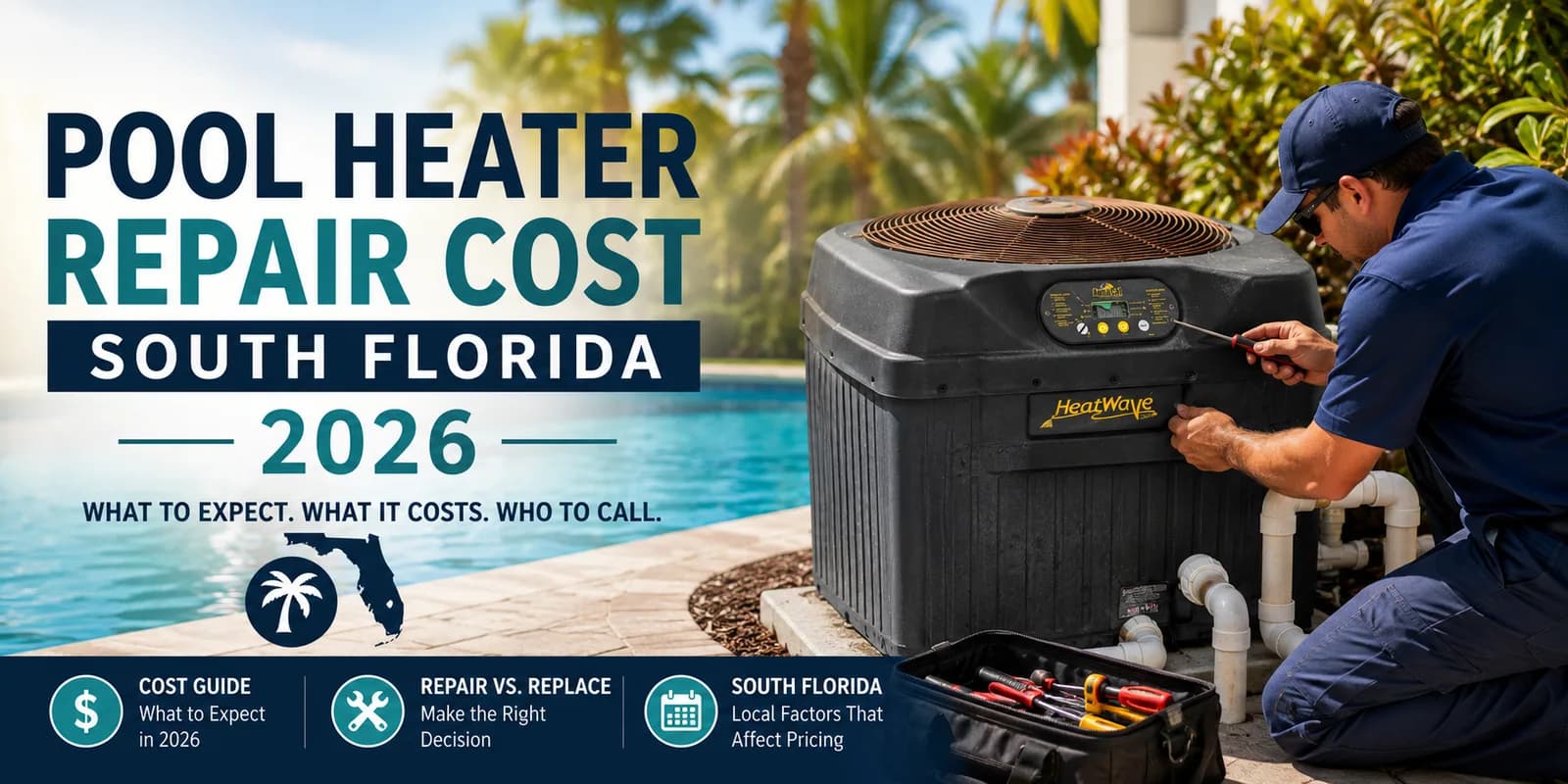
Of everything on a coastal pad, the heat pump has the most exposed metal. Its job is to pull heat out of the air, so it pulls a steady stream of salt-laden air across its coil all day. The fins, the coil, the fasteners, and the electrical connections in the cabinet all sit in that airflow. On the coast, the failures we see on heat pumps are corroded electrical connections and controls, a coil that has started to break down, and cabinet hardware that has rusted through, long before the compressor wears out.
What helps: keep shrubs and debris off the unit so air moves freely, have the coil and cabinet checked during routine service, and fix a nuisance fault code early instead of resetting it for months. When a coastal heat pump does need replacing, ask whether the model offers a coated coil or coastal package, and have it sized and plumbed correctly from the start. Our heater repair page covers the diagnostic, our heater installation and replacement page covers new units, and you can book heater service directly.
The corridor that's actually affected
Salt-air damage is a function of distance from the ocean and prevailing wind. Based on what we've seen across thousands of equipment failures in our service area:
- 0–500 feet from the ocean (oceanfront). Most aggressive corridor. Highland Beach oceanfront, Harbor Beach oceanfront, Hillsboro Beach. Equipment lifespan: 50–65% of inland.
- 500 feet–1 mile from the ocean. Severe but manageable. Las Olas Isles, Royal Palm Yacht & Country Club waterfront, eastern Boca off A1A. Equipment lifespan: 65–75% of inland.
- 1–3 miles from the ocean. Moderate. Most of east Boca, east Delray, Coral Ridge, Victoria Park. Equipment lifespan: 80–90% of inland.
- 3+ miles inland. Salt-air effect is minimal — equipment lifespan tracks national averages.
Canal-front pools in the same zip code as oceanfront pools also face elevated salt-intrusion in groundwater, which compounds the problem on equipment exposed to splash. Worst case is a canal-front home within a half-mile of the ocean — that's the most aggressive equipment-pad environment in our service area.
What we do on every weekly visit at coastal pools
Here's the routine Matt's father, Jeff Balog, established and we've refined across two generations. Every weekly visit on a coastal route — Las Olas Isles, Harbor Beach, Highland Beach, oceanfront Delray, oceanfront Boca — includes:
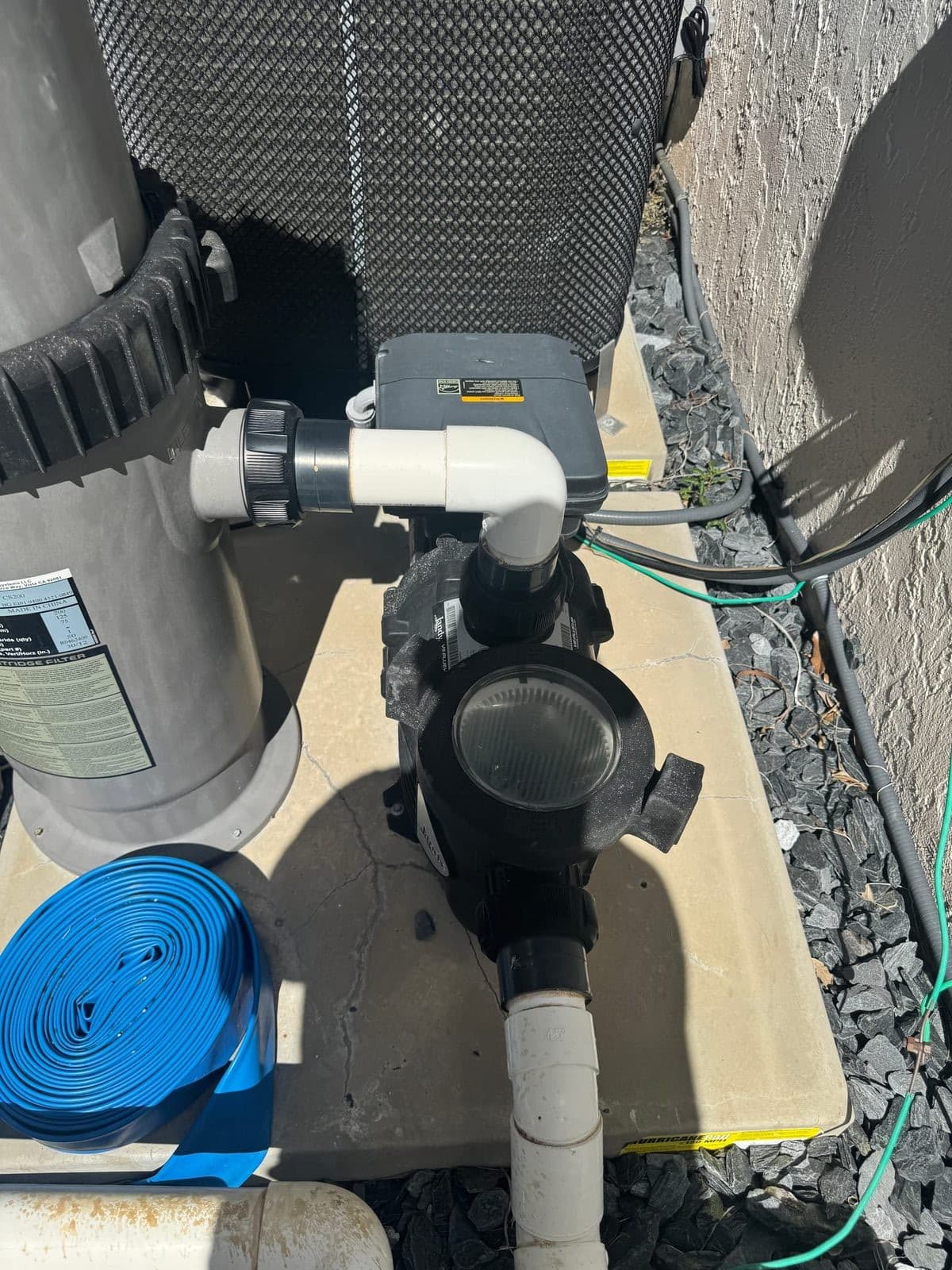
- Equipment-pad walk-around before any chemistry work. Eyes on every component. Look for new corrosion, leaks, salt deposits, rust streaks, brittle hose or O-ring material.
- Salt cell inspection quarterly. Disassemble, photograph the electrode plates, log scale buildup, log electrode wear. Replace before failure, not after — a failed cell at 11pm Saturday is a Monday call we don't want to take.
- Pump motor inspection monthly. Cap removal, visual inspection of windings and bearings, listen for bearing play. A failing motor sounds different two months before it fails.
- Heater cabinet inspection monthly. Cabinet seam integrity, header condition, exhaust port condition. Heater cabinets fail at the seams in coastal corridors faster than the burner ever does.
- Stainless hardware rinse. Where accessible, fresh-water rinse on ladders, handrails, pump housing fasteners. Salt washes off; it doesn't evaporate.
- Rubber and plastic check. O-rings, gaskets, valve seats — note any that are starting to harden or crack.
- Service report with photos every visit. Equipment-pad photos included. Homeowner sees what we see.
What homeowners can do
You can't change physics. You can change the trajectory. The single highest-leverage moves a coastal homeowner can make:
- Cover the equipment pad. A simple shed, awning, or screened enclosure cuts direct salt deposition by 60–80%. Pays for itself in one pump replacement avoided.
- Run the pump on time-of-use schedules that include daytime hours. Equipment that operates and stays warm sheds salt-air moisture better than equipment that sits idle all day.
- Hose-rinse the equipment pad weekly. Even a 30-second rinse with garden-hose pressure cuts salt buildup. We do this on every coastal weekly visit, but homeowners can do it between.
- Specify titanium or coated hardware on replacements. When a salt cell or heater fails, the upgrade options are real. Titanium electrodes and powder-coated cabinets are worth the premium in salt-air corridors.
- Track equipment ages. Know when the pump, filter, salt cell, and heater were installed. Coastal homeowners should be replacing on a 7–10-year cycle on the pump and 3–4-year cycle on the salt cell — proactively, before the failure.
What this costs
Coastal pool service runs a small premium over inland — typically $10–$25/month — because the protocol is more involved. The homeowner economics: that $20/month premium ($240/year) avoids one pump replacement every 5–7 years that would otherwise hit at year 6 instead of year 11. The math is in the homeowner's favor by a factor of 5x.
The companies that don't adjust their coastal protocol — and there are plenty in this market — are running a race to the bottom on price. The hardware costs the same to fail at year 6 as it does at year 11; the only difference is who pays for it. We don't want to be the company that lets that happen.
If you have a pool in a coastal corridor — Las Olas Isles, Harbor Beach, Coral Ridge, Highland Beach oceanfront, oceanfront Boca, oceanfront Delray, or any canal-front home along the Intracoastal — and you want a service company whose protocol is built for it, request a free on-site evaluation. We'll walk the equipment pad with you and tell you honestly what's aging, what's healthy, and what to budget for.
Frequently Asked Questions
It depends on distance from the ocean. Oceanfront equipment (0–500 feet) lasts 50–65% as long as inland. 500 feet to 1 mile out (Las Olas Isles, Royal Palm Yacht & Country Club, eastern Boca off A1A) lasts 65–75% of inland lifespan. 1–3 miles inland (most of east Boca, east Delray, Coral Ridge, Victoria Park) lasts 80–90% of inland. Beyond 3 miles the salt-air effect is minimal. Canal-front pools within a half-mile of the ocean face the most aggressive equipment-pad environment because they get both salt-air corrosion and salt-intrusion in groundwater.
Three categories. (1) Galvanic corrosion at dissimilar-metal junctions: stainless screws in aluminum pump housings seize, heater cabinet seams rust through. (2) Steel and stainless oxidation: pump housings pit, ladders show orange tea-staining within 18 months even on 304 stainless. (3) Plastic and rubber degradation: O-rings, gaskets, and salt cell housings break down 25–35% faster than inland. The actual failure point is usually electronics — a degraded gasket lets moisture in, the moisture finds the automation board, the system is dead.
Five highest-leverage moves: (1) Cover the equipment pad (shed, awning, screened enclosure) — cuts salt deposition by 60–80%. (2) Hose-rinse the pad weekly — salt washes off but doesn't evaporate. (3) Run the pump on schedules that include daytime hours — equipment that operates and stays warm sheds salt-air moisture better. (4) Specify titanium electrodes and powder-coated cabinets when replacing salt cells and heaters. (5) Track equipment ages and replace proactively — pumps on a 7–10 year cycle, salt cells on a 3–4 year cycle in coastal corridors, before they fail.
Yes — typically $10–$25/month more, because the protocol is more involved: equipment-pad walk-around every visit, monthly pump motor inspection, monthly heater cabinet check, quarterly salt cell disassembly and inspection, fresh-water rinse on accessible stainless, and rubber-and-plastic degradation checks. Companies that don't adjust their protocol for coastal conditions are running a race to the bottom on price; the equipment costs the same to fail at year 6 as it does at year 11 — the only question is who pays for it.
Salt cell electrode degradation is the most common — and the most preventable. Coastal salt cells routinely fail at year 3 instead of year 5. Look for: low chlorine output despite proper salt level, white scale buildup on the plates visible through the housing, error codes from the chlorinator board, and rising chlorinator amperage as the cell tries to compensate for plate wear. Quarterly disassembly and visual inspection (with photos in the service report) catches this 6–12 weeks before failure.
Need a pro to handle this?
Florida's Best Pool Service has serviced South Florida homes for 40+ years. CPO-licensed. Fully insured. 230+ five-star reviews.