
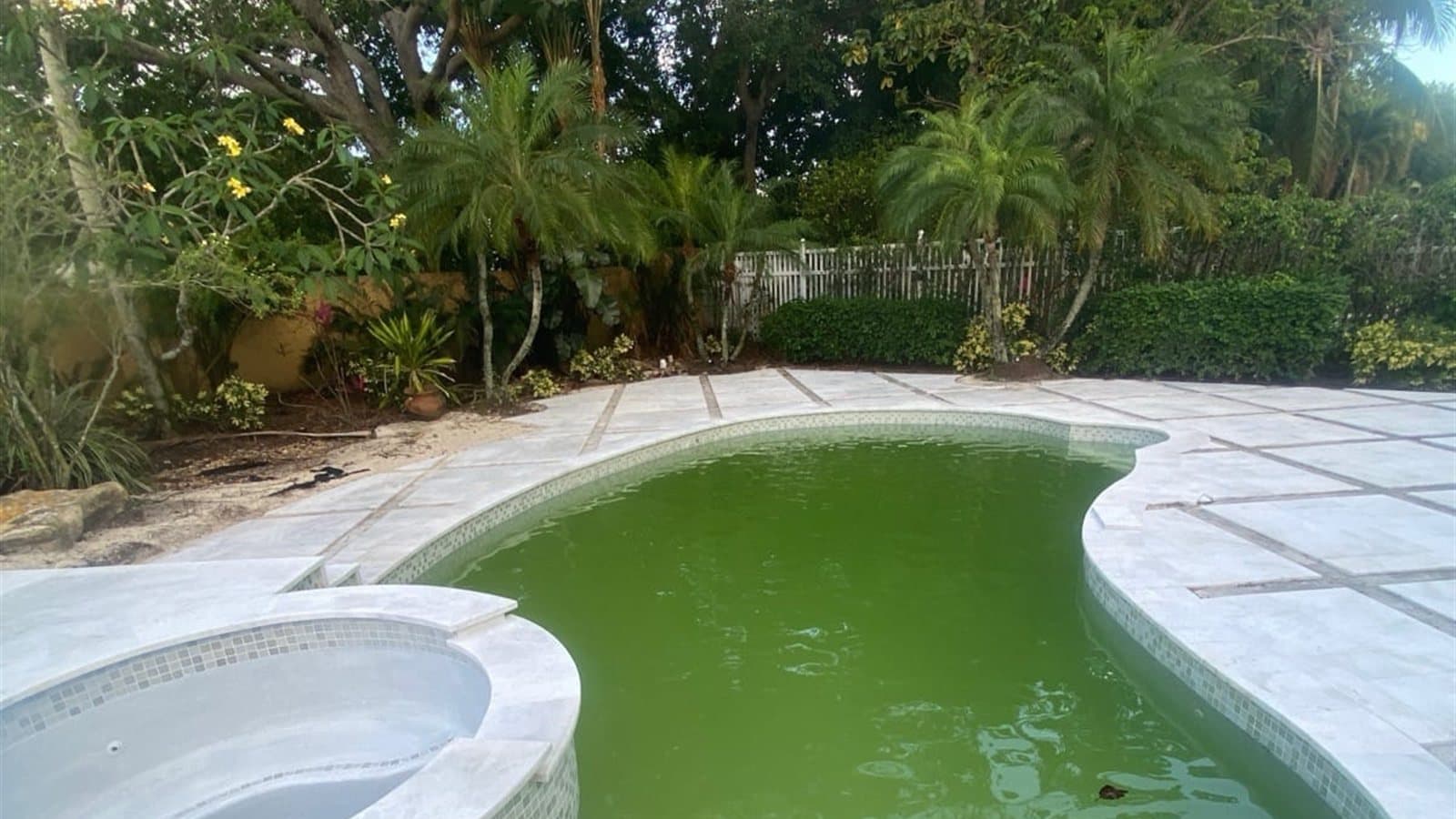
I've been on Florida pool routes since the late 1990s — my father has been a licensed Florida pool contractor since 1989, and he's the one who taught me. After 25 years on Delray routes, the call I take most often after an August thunderstorm goes like this: “The pool was fine yesterday. This morning it's green.”
It's not random. Late-summer Delray pools bloom on a specific mechanism that the weather and the local water supply set up together — and once you understand the four variables that line up, the prevention protocol is straightforward.
This post is the field-tested explanation of why Delray pools specifically bloom after summer rain, what the chemistry looks like in the first 72 hours, and the pre-storm protocol I run on every weekly route I manage during the August–October window.
The companion field test on phosphate behavior across 12 Boca and Delray pools after the 2024 storm week is in my phosphates after summer rain post. This one is about the bloom itself — why it happens, why Delray makes it worse, and how to keep ahead of it.
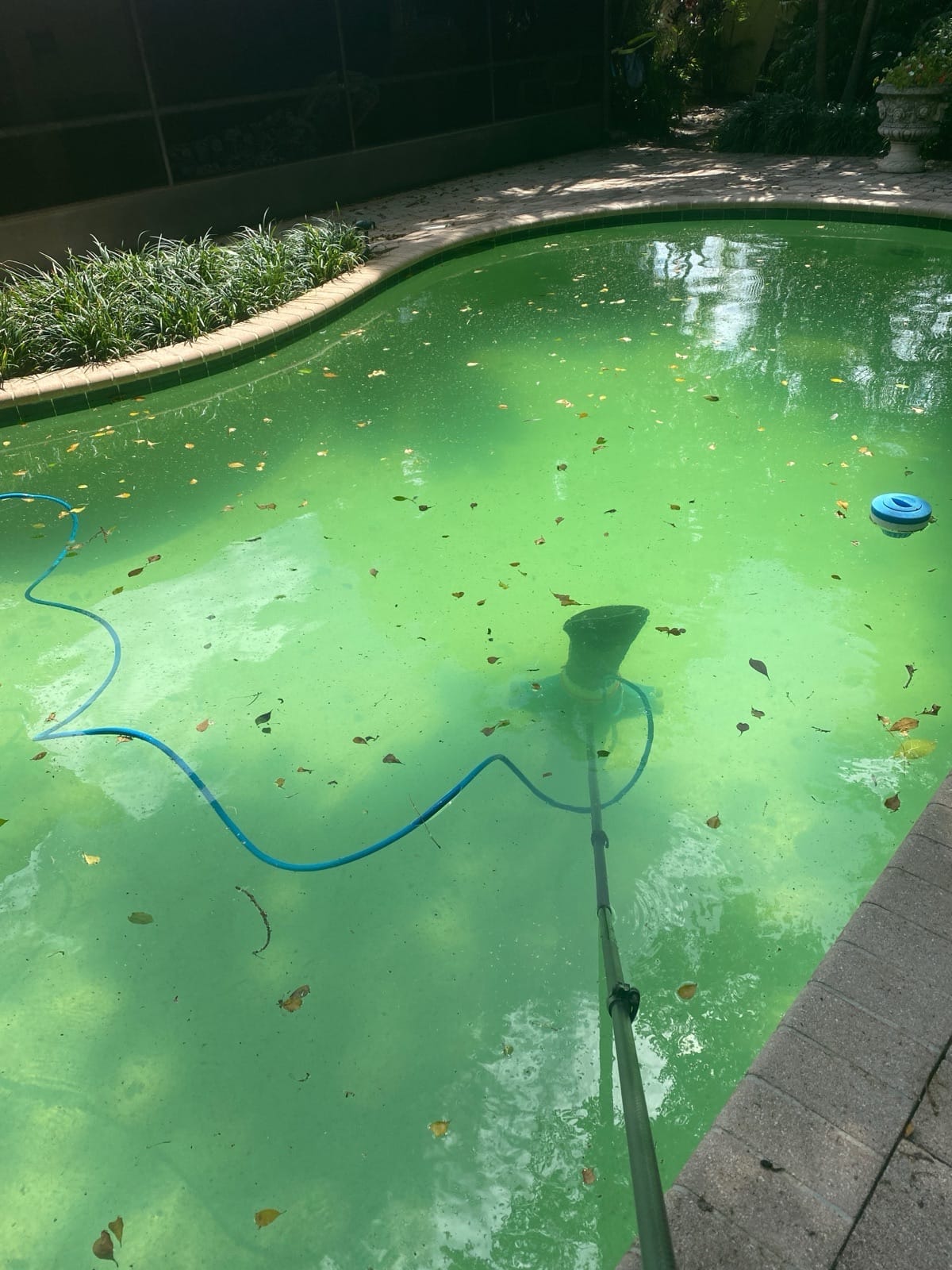
The 4-variable bloom mechanism (what actually happens in 48–72 hours)
An algae bloom is not one thing going wrong — it's four things going wrong at once. South Florida summer rain triggers all four on the same day.
| Variable | What the storm does | The bloom mechanism |
|---|---|---|
| Free chlorine (FC) | 2–4 inches of rain dilutes pool chemistry by 5–15% depending on pool size and capture | FC drops from 3–4 ppm to under 1 ppm. Algae can survive under 0.5 ppm. |
| Phosphate (PO4) | Lawn fertilizer runoff + organic debris adds phosphate. West-Delray well-water irrigation amplifies it. | From 200 ppb (normal) to 1,200–3,000+ ppb. Unlimited algae food. |
| Organic debris | Leaves, palm fronds, oak tassels, grass clippings wash in | Creates chlorine demand — every gram of organic burns measurable chlorine to oxidize. |
| pH and alkalinity | Rainwater is slightly acidic (pH 5.5–6.0); heavy rain drops pool pH | Low pH initially helps chlorine kill, but the swing destabilizes the system. |
| All four happen inside 6 hours. If FC isn't restored within 36, algae wins. | ||
Why Delray makes the bloom worse than most South Florida cities
Delray isn't alone in this — every South Florida pool fights the same summer storms. But Delray pools bloom more often, and faster, than pools in some adjacent markets. Three local factors:
1. West-Delray well-water aquifer (phosphate-rich)
Country-club Delray — Addison Reserve, Mizner CC, Hamlet, Seven Bridges, Lakeside Estates — sits on a phosphate-rich aquifer. Irrigation pulls from that aquifer, and overspray plus runoff carries phosphate directly into the pool. I've logged readings of 1,200–2,800 ppb on west-Delray pools the day after a heavy August storm. That's 5–10× the baseline that pools 30 miles inland see.
2. Dense canopy east of I-95 (organic debris bomb)
Lake Ida, Pelican Harbor, downtown Delray, and Hamlet all sit under heavy oak and ficus canopy. A 3-inch storm in August deposits a measurable kilogram of plant debris into the average open pool. Every gram burns chlorine. Even on screened pools, surface runoff from the deck carries leaf-litter into the skimmer.
3. Salt-air-stressed equipment on the coast
East-Delray equipment — pumps and salt cells in Seagate, Tropic Isle, and Delray Beach Club — corrodes faster, and the first failure mode often shows up during the storm week. A salt cell at 60% efficiency during the dry season fails completely under the chlorine demand of post-storm conditions. Pump impeller blockage from storm debris compounds it. The pool ends up undersanitized exactly when phosphate is peaking.
The first-72-hour timeline (what an unprotected Delray pool looks like)
| Hours after storm | Chemistry state | Visual state |
|---|---|---|
| 0–6 hr | FC drops 30–60%, pH drops 0.2–0.4, phosphate spikes 500–2,000+ ppb | Pool looks clear, debris on surface |
| 6–24 hr | FC under 1 ppm if not boosted. Organic debris burning remaining chlorine fast. | Slight haze, debris settling to floor |
| 24–36 hr | FC near zero. Phosphate still elevated. CYA unchanged. Algae cells multiplying. | Walls feel slick; faint green tint in deep end if backlit |
| 36–48 hr | Algae visible on walls and floor. Chlorine demand 3–5× normal. | Clear green water — “swamp green” |
| 48–72 hr | Full bloom. Algae penetrated grout, plaster pores. Filter loading fast. | Opaque green — no visibility past 12 inches |
| 72+ hr | Recovery is now a $350–$1,200 job | Green-pool recovery service required |
The pre-storm protocol (run this 24–48 hours before any named storm or forecast 1.5+ inch rain)
Every weekly route I manage in Delray follows this checklist when the forecast shows a storm with 1.5+ inches of expected rain — and absolutely when a named storm is in the cone.
- Shock free chlorine to 10 ppm. Liquid chlorine or calcium hypochlorite — not trichlor (adds CYA you don't need).
- Balance pH to 7.4 and total alkalinity to 80–100 ppm. Mid-range buffers handle the rainwater swing.
- Add maintenance-dose algaecide. Polyquat 60 (copper-free) is the field standard. $15–$30 dose for 15,000 gal.
- Backwash filter (sand/DE) or rinse cartridges. Storm debris loads a dirty filter past usable inside 12 hours.
- Run pump 24 hours. Distribute the shock and algaecide; keep flow during the storm if power holds.
- Check phosphate (Aug–Oct only). If reading is over 500 ppb, treat with lanthanum-chloride remover before the storm — not after.
- Screen-enclosure walk. Flag tears. Iguanas dropping out of trees during the storm find every entry point.
Pools that follow this protocol bloom less than 10% of the time during the worst Delray storm weeks. Pools that skip it bloom more than 60% of the time in the Aug–Oct window.
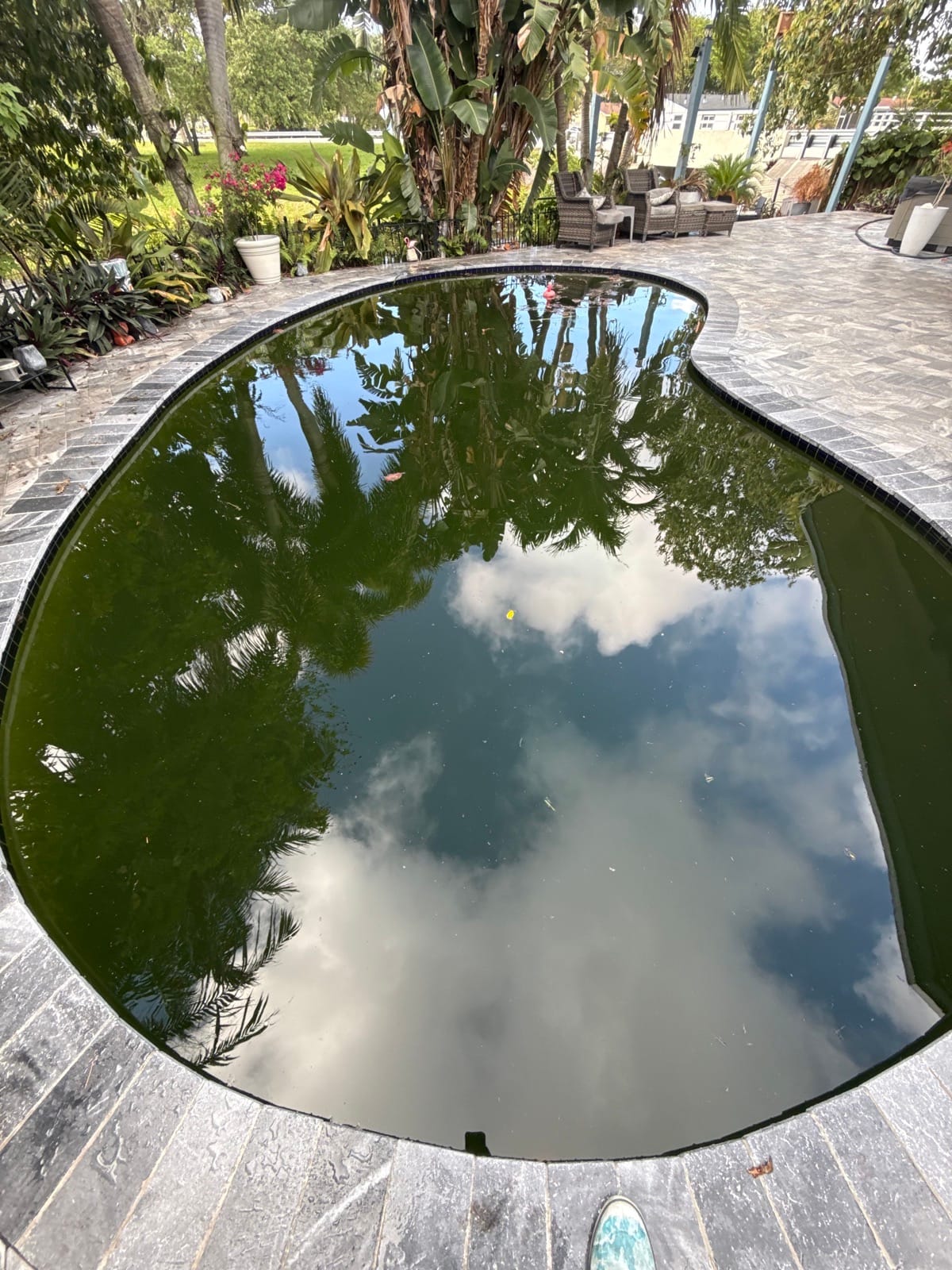
The post-storm recovery protocol (if it already turned green)
- Test CYA first. If CYA is over 70 ppm, recovery will fail until you drain-and-refill 33–50% of the pool. Chlorine cannot kill algae when CYA is locking it up.
- Shock to FC level matched to CYA. Use the FC:CYA ratio — typically 30–40% of CYA as ppm FC. (50 ppm CYA = 20 ppm FC target.)
- Brush every surface. Walls, floor, steps, tile, dead zones behind the ladder. Algae attaches; chlorine alone won't reach it.
- Run filter 24/7 until clear. Backwash or rinse every 12 hours during recovery — filter loads fast with dead algae.
- Treat phosphate after algae is dead, not before. Dead algae itself releases phosphate; treating before clearing wastes the product.
- Test daily until FC holds 24 hours. Once FC drops less than 1 ppm overnight, the bloom is dead.
Full algae-type identification and species-specific recovery on our green algae library page. The other algae types (mustard, black) live on mustard yellow algae and black algae. The full algae catalogue with Delray-specific causes is on our pool algae types decoded post.
Why generic algaecides don't solve this
Pool stores will sell you a 32-oz bottle of algaecide for $40 and tell you it's the answer. It isn't. Algaecide is preventive — it slows growth, doesn't kill an established bloom. The actual algicide in any pool is chlorine, and it only works if FC is high enough and CYA is in range. The four-variable mechanism above tells you why: in a Delray summer storm, FC is the variable that fails first. The product that fixes that is liquid chlorine, not algaecide.
The 2026 Delray cost reference
| Service | 2026 Delray price | Notes |
|---|---|---|
| Pre-storm protocol (DIY) | $20–$50 in chemicals | 10 ppm shock + algaecide + filter clean |
| Pre-storm protocol (existing weekly client) | $0 | Included in flat monthly rate |
| Pre-storm protocol (non-client emergency) | $120–$240 | One-time on-site service |
| Green-to-clean recovery (light bloom) | $350–$600 | Chemistry + brushing + multiple filter cleans, 5–7 days |
| Green-to-clean recovery (heavy bloom) | $600–$1,200 | Plus possible partial drain if CYA high |
| Acid wash + drain (worst case — algae penetrated plaster) | $400–$900 | Once-a-decade fix for severe neglect |
| Phosphate treatment (Aug–Oct preventive) | $30–$70 chemicals · or $120–$240 pro | 2–4 times per year for west-Delray pools |
The 30-second Delray storm-week decision tree
- Storm forecast with 1.5+ inches? Run the pre-storm protocol 24–48 hours ahead.
- Named storm in the cone? Same protocol + lower pool level 6–12 inches if you're in a flood zone.
- Already turned green? Test CYA first. Don't shock blindly.
- West Delray, Aug–Oct? Test phosphate quarterly, treat preventively at >500 ppb.
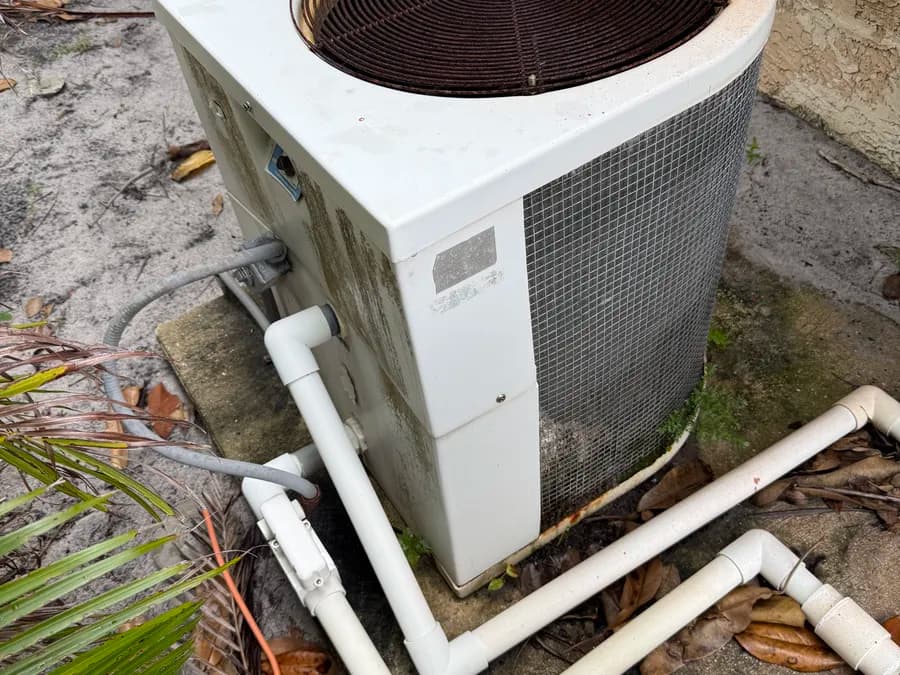
- East Delray, equipment over 5 years old? Inspect the pad every visit. A salt cell that fails during the storm causes the bloom, not the storm itself.
What a competent weekly route actually does in storm season
On Florida's Best Pool Service routes in Delray, August through October looks different than the rest of the year. We bump preventive chlorine slightly above baseline, run quarterly phosphate tests, walk every screen enclosure for tears, flag any equipment showing corrosion or efficiency drop, and pre-shock pools with a forecasted heavy storm at no surcharge to existing clients. A real Delray weekly route is built around this seasonal pattern, not just generic chemistry.
Run your specific pool through our pool service cost calculator for a 2026 monthly quote that factors in size, equipment type, and distance from the coast. For the broader Delray hire decision, see our Boca + Delray pool service comparison post.
The low-risk first step
If your pool has bloomed two or more times in the last 12 months — or if you're heading into the Aug–Oct window without a documented storm protocol — the lowest-risk first step is a free on-site evaluation. We'll test your water on site, walk the equipment pad, check phosphate and CYA, and tell you honestly what your pool needs before the next named storm hits — whether you hire us or not.
Florida's Best Pool Service is family-owned, CPO C-105377, fully insured, and runs weekly routes through Delray Beach, Boca Raton, Highland Beach, Boynton Beach, Fort Lauderdale, Pompano Beach, Coral Springs, Coconut Creek, Wellington, and the surrounding South Florida service corridor. Your regular tech, same day every week, once your route is established. Photo-documented service report after every visit. Month-to-month — no long-term lock-in. Built around 40+ years of combined founder experience between Matt Balog, Joe Ford, Ronald Liddell, and Doug Santiago.
Request a free evaluation or call 954-347-1120.
Frequently Asked Questions
South Florida thunderstorms trigger algae blooms in 48–72 hours by hitting four chemistry variables at once: rain dilutes free chlorine (FC drops from 3–4 ppm to under 1 ppm), lawn-fertilizer runoff adds phosphate (especially severe in west Delray on the well-water aquifer, where readings spike to 1,200–3,000+ ppb), organic debris washes in and burns chlorine fast, and pH swings as the slightly-acidic rainwater hits the pool. If FC sits at zero for 36 hours with phosphates above 500 ppb, algae wins every time. The fix is a pre-storm protocol — shock to 10 ppm FC, balance pH and TA, add algaecide, backwash filter, run pump 24 hrs — not a reactive algaecide bottle after the fact.
On an unprotected pool: 48–72 hours from end-of-storm to a visible green bloom. The timeline goes: hour 0–6 free chlorine drops 30–60% and phosphate spikes; hour 6–24 FC drops under 1 ppm if not boosted; hour 24–36 FC is near zero and algae cells start multiplying (walls may feel slick); hour 36–48 visible algae appears on walls and floor; hour 48–72 the pool is opaque green and recovery is now a $350–$1,200 job. Pools that follow a pre-storm protocol (10 ppm shock + balanced chemistry + clean filter + algaecide dose) bloom less than 10% of the time even during the worst Delray storm weeks.
Run this 24–48 hours before any forecast 1.5+ inch storm or named storm in the cone: (1) shock free chlorine to 10 ppm with liquid chlorine or calcium hypochlorite — not trichlor, which adds CYA; (2) balance pH to 7.4 and total alkalinity to 80–100 ppm; (3) add a maintenance dose of polyquat 60 algaecide ($15–$30 for 15,000 gal); (4) backwash filter (sand/DE) or rinse cartridges; (5) run pump 24 hours to distribute; (6) check phosphate in the Aug–Oct window and treat if over 500 ppb; (7) walk the screen enclosure and flag tears (iguanas drop out of trees during storms). Pools that follow this bloom less than 10% of the time vs. over 60% for unprotected pools.
West Delray — Addison Reserve, Mizner Country Club, Hamlet, Seven Bridges, Lakeside Estates — sits on a phosphate-rich well-water aquifer. Irrigation pulls from that aquifer, and overspray plus lawn-fertilizer runoff carries phosphate directly into the pool after every heavy rain. Logged readings on west-Delray pools the day after a heavy August storm run 1,200–2,800 ppb — 5–10× the baseline that pools 30 miles inland see. Phosphates above 500 ppb double or triple chlorine demand, so even if FC reads in range on Monday it can crash to zero by Wednesday with that much algae food in the water. The fix is quarterly phosphate testing on calibrated reagent and lanthanum-chloride treatment in the Aug–Oct window.
Algaecide is preventive — it slows algae growth and is a useful component of a pre-storm protocol. It does not kill an established bloom. The actual algicide in any pool is chlorine, and chlorine only works if free chlorine is high enough and cyanuric acid (CYA) is in range. In a Delray summer storm, free chlorine is the variable that fails first. So the product that fixes that is liquid chlorine (shock to 10 ppm before the storm), not a $40 bottle of algaecide after the pool has turned green. Polyquat 60 algaecide as a pre-storm maintenance dose ($15–$30 for 15,000 gal) is helpful as a buffer — but the chlorine shock is the load-bearing step.
Run the recovery protocol in order. (1) Test CYA first — if it's over 70 ppm, recovery will fail until you drain-and-refill 33–50% of the pool, because chlorine cannot kill algae when CYA is locking it up. (2) Shock to FC matched to CYA — use the FC:CYA ratio, typically 30–40% of CYA as ppm FC (50 ppm CYA = 20 ppm FC target). (3) Brush every surface — walls, floor, steps, tile, dead zones behind the ladder. (4) Run filter 24/7 until clear, backwashing every 12 hours during recovery. (5) Treat phosphate after algae is dead, not before — dead algae releases phosphate, so treating before clearing wastes the product. (6) Test daily until FC holds for 24 hours; once FC drops less than 1 ppm overnight, the bloom is dead.
Light bloom (visible algae but pool still clear-ish in shallow end): $350–$600, typically 5–7 days of chemistry plus brushing plus multiple filter cleans. Heavy bloom (opaque green, no visibility past 12 inches): $600–$1,200, plus possible partial drain if CYA is over 70 ppm. Worst case — algae has penetrated plaster pores and is recurring after recovery — acid wash plus drain runs $400–$900 on top, a once-a-decade fix for severe neglect. For comparison, the pre-storm protocol that prevents the bloom in the first place runs $20–$50 in chemicals DIY, or is included free in our weekly route service.
Three reasons that compound. (1) Dense oak and ficus canopy in Lake Ida, Pelican Harbor, downtown Delray, and Hamlet deposits a measurable kilogram of plant debris in the average open pool during a 3-inch storm. Every gram burns chlorine. (2) Salt-air-stressed equipment in Seagate, Tropic Isle, and Delray Beach Club corrodes faster, and the first failure mode often shows up during the storm week — a salt cell at 60% efficiency during the dry season fails completely under the chlorine demand of post-storm conditions, and pump impeller blockage from storm debris compounds it. (3) Less screen-enclosure usage on barrier-island pools means more direct rain entry and more wildlife (iguanas, raccoons) entering. Each one bumps the bloom probability — together they make east-Delray pools the highest storm-week risk on our route.
Late August through October. That's when three factors line up: rainy season peaks (named storms plus daily afternoon thunderstorms), phosphate spikes are highest as accumulated lawn fertilizer washes in with rainwater, and pool equipment has had a full summer of heat-and-salt stress so failure rates climb. Across our service corridor we see 80%+ of annual algae blooms happen in this window. The dry season — January through March — runs less than 5% of annual blooms even on poorly-maintained pools. April through July is moderate. November through December is low. So if your weekly service is dialed in from August 15 through October 31, you avoid the worst of the year — and if it's not, you're paying for recovery at least once during that window.
No — do not drain a pool before a hurricane. A full pool is structurally safer; an empty pool can pop out of the ground from groundwater hydrostatic pressure (Florida groundwater is high, especially in east Delray near the Intracoastal). Lower the water level only 6–12 inches, and only if you're in an active flood zone where overflow could damage the pad or the house foundation. The rest of the protocol — shock, balance, algaecide, filter clean — applies. Full hurricane prep on our hurricane-pool-preparation post; do NOT cover the pool either (covers become wind-catches and debris). Equipment protection: turn off breakers, unplug timers, wrap pump and heater controls in plastic, secure or remove the salt cell controller.
Need a pro to handle this?
Florida's Best Pool Service has serviced South Florida homes for 40+ years. CPO-licensed. Fully insured. 230+ five-star reviews.