
Roughly 30% of our weekly route in Boca Raton, Delray Beach, Highland Beach, and the surrounding service area is snowbird homes — clients who fly back to New York, Boston, Chicago, Toronto, or Montreal in May and don't come back to Florida until October or November. Between Matt's 30 years on the route and our 40+ years of combined founder experience — Matt Balog, Joe Ford, Ronald Liddell, and Doug Santiago — I can tell you with certainty: the difference between a great snowbird pool plan and a mediocre one is the difference between coming back to a clean pool in October and coming back to a $1,500 green-pool recovery bill.
This guide covers what we do, what homeowners need to do, and what to ask any pool service company you're considering before you leave for the summer.
Why summer is the hardest time for an unattended Florida pool
Northerners assume summer is the easy season because the pool isn't being used. Wrong, and dangerously wrong. South Florida summer is the most aggressive chemistry environment in North America:
- UV destroys chlorine in hours, not days. Direct summer sun in Boca burns through unstabilized chlorine in 4–6 hours.
- Daily afternoon thunderstorms reset chemistry. Heavy rain dilutes salt, drops alkalinity, raises pH, washes phosphates and organic debris into the water.
- Heat accelerates algae growth exponentially. An algae bloom that would take 4 days in March takes 18 hours in August.
- Hurricane season runs June through November. Right when you're not here.
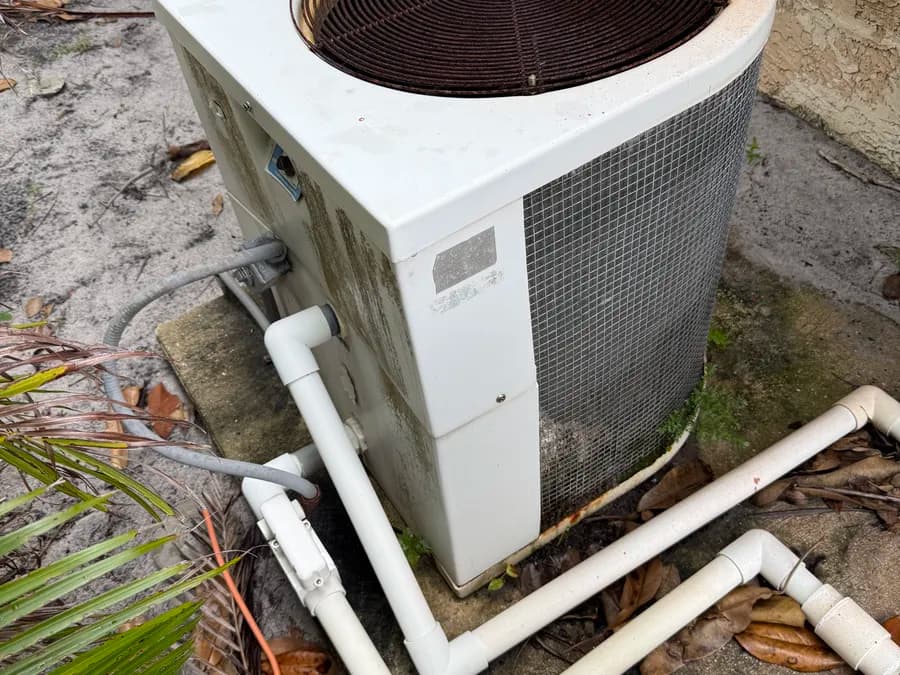
- Equipment failures cluster in summer. Pumps run hottest, salt cells work hardest, heaters develop slow leaks. A failed pump in July with no one watching means a green pool inside 72 hours.
A pool that is “fine” on May 1st can be unrecoverable by August 15th if the service company is cutting corners. This is why the routine matters more than anything else.
What our snowbird service includes
For our snowbird clients, the weekly summer visit is more rigorous than an in-season visit, not less. Here's the protocol — same one Matt's dad, Jeff Balog, established, with summer-specific updates we've refined over the last decade:
- Weekly visit, no exceptions. Bi-weekly summer service in South Florida is how unattended pools turn green. Anyone offering bi-weekly to save you money is selling you future repair bills.
- Water test every visit. Test strips every time, and a LaMotte WaterLink Spin Touch photometer on site when the pool needs a closer look. Plus phosphate quarterly.
- Photo-documented service reports on your schedule. You're in Connecticut. You can't see the pool. Tell us how often you want photos and we'll send them.
- Equipment-pad inspection every visit. Pump, filter, salt cell, heater, automation panel. We catch the slow leak in week 3 before it becomes a flood in week 11.
- Storm preparation if a named system threatens. We pre-treat chemistry, lower water level if appropriate, secure loose deck furniture, photograph the equipment pad before the storm. Post-storm, we're back as fast as the route allows, weekly clients first, to clear debris and rebalance.
- Fast response to any chemistry emergency. Our snowbird clients have a direct text line to the office. Equipment failure, green water, screen damage from a storm — we get there as fast as the route allows. No surcharge.
- Pre-return walkthrough. Two weeks before the homeowner returns from up north, we do a deeper service: filter clean, equipment lubrication, water-line tile detail. Pool is ready Day 1 of the homeowner being back.
What homeowners need to do before leaving
Most of the work is on us, but there are things only the homeowner can handle. The 10-point pre-departure checklist we send every snowbird client:
- Confirm your service company's summer protocol in writing. Weekly visits, photo reports, storm response, emergency contact. Get it in writing, not just verbal.
- Provide gate codes, alarm codes, and pet info. Your service tech can't do the job if they can't get in.
- Leave the pump on the right schedule. Summer: 8–10 hours/day. Run during daylight if you have solar; otherwise during off-peak electric hours.
- Trim back any overhanging trees. Reduces leaf load and iguana access. We do this for clients who ask, but ideally it's done before you leave.
- Document equipment condition. Photos of pump, filter, heater, salt cell with model numbers. We have it on file too, but redundancy matters.
- Provide a credit card on file for repairs under a pre-approved threshold. $500 is a common threshold. If a salt cell fails in July, we replace it without waiting for a wire transfer from Massachusetts.
- Make sure home insurance covers pool equipment. Some policies exclude pool electronics. Verify before hurricane season.
- Provide a hurricane authorization in writing. Authorize us to lower water level, secure equipment, and pre-treat chemistry if a named storm enters the cone.
- Test the irrigation system. Sprinklers misaligned to spray into the pool drive chemistry crazy and add dissolved solids fast.
- Confirm someone in town has a key. Neighbor, family, property manager. We're your pool company, not your house-watching service. If something goes wrong inside the home, someone needs to be reachable locally.
The real cost of getting this wrong
I've walked into too many homes in October to count where the cost-saving choice in May became the catastrophe in October. Common scenarios:
- Bi-weekly summer service to save $60/month. Total summer savings: $300. Cost of green-pool recovery in October: $800–$1,500. Plus a stained finish that may need acid wash or partial resurfacing the next spring: $2,500–$8,000.
- Service company that doesn't do storm response. Hurricane debris sits in the pool for two weeks until someone shows up. Stains the finish, kills the salt cell, blows the pump. Total damage: $2,000–$5,000.
- No photo reports. Pump starts leaking in July. Service company “didn't notice” until October. Pump replacement plus equipment-pad damage: $1,500–$3,000.
- No emergency contact. Salt cell fails Friday afternoon. By Monday morning the pool is yellow-green. Recovery: $400–$900.
You can't avoid every problem. You can dramatically reduce the chance of a $5,000 surprise by paying for the right service in the first place. Routine, documentation, fast response. That's the whole product.
What to ask any pool service before signing up as a snowbird client
- Do you do weekly summer service? (Bi-weekly is a deal-breaker.)
- Do you send photo-documented reports every visit?
- What's your protocol when a named hurricane enters the cone?
- What's your same-day emergency response policy when I'm up north?
- Do you charge surcharges for storm response, equipment inspection, or chemical issues, or is it included in flat-rate monthly?
- How do I authorize repairs while I'm away? What's the dollar threshold?
- Will I have one consistent technician on the pool, or different ones each week?
- Can I see references from other snowbird clients on similar routes?
Three or more “not really” or “we charge extra for that” answers and you're looking at the wrong company.
Most-asked questions from snowbird clients
A few we hear constantly:
- “Should I drain the pool while I'm gone?” No. A drained pool in Florida is at risk of structural damage from hydrostatic pressure (groundwater pushing the pool up). Keep it full and serviced.
- “Can I just turn off the equipment for the summer?” No. Stagnant pool water in Florida summer becomes a public-health concern within days, not weeks.
- “Can the service company just dump in extra chlorine and skip a few weeks?” No. Over-chlorination bleaches finish and degrades equipment; under-circulation creates algae regardless of chlorine level.
- “What if I want to come back early for a long weekend?” Just text us 48 hours ahead. We'll do an extra detail visit so the pool is swim-ready when you arrive.
- “Do you raise prices in the summer?” No. Flat-rate, year-round, no seasonal surcharges. It's the same monthly price in July as it is in February.
If you're a snowbird homeowner in Boca Raton, Delray Beach, Fort Lauderdale, Highland Beach, Boynton Beach, or anywhere in the surrounding service area and you want a pool service company whose protocol is built for the May-to-October absence — request a free on-site evaluation. Prompt written quote, no long-term contract, your regular tech every week (once your route is established), and we'll do the pre-departure walkthrough as part of onboarding.
Watch: Leaving Town? Do These Four Things to Your Pool First
Shutting the pump off before a trip is what turns a pool into a swamp. What to do to the filter, the chlorine and the run time before you leave.
Frequently Asked Questions
No. A drained pool in Florida is at risk of structural damage from hydrostatic pressure — groundwater pressure can push an empty pool up out of the ground or crack the shell. Keep it full and serviced. Bi-weekly summer service is also a deal-breaker; weekly is the only acceptable cadence for an unattended South Florida pool May through October.
At Florida's Best Pool Service, snowbird service includes weekly visits with a water test every visit (test strips, plus a LaMotte WaterLink Spin Touch photometer when the pool needs a closer look), photo-documented service reports emailed on the schedule the homeowner chooses, equipment-pad inspection every visit, storm preparation when a named system enters the cone (pre-treat chemistry, lower water level if appropriate, secure deck furniture), fast emergency response with no surcharge, and a deeper pre-return walkthrough two weeks before the homeowner is back. All flat-rate, no seasonal surcharges.
Ten-point checklist: (1) Get summer protocol in writing from your service company. (2) Provide gate codes, alarm codes, pet info. (3) Set pump to 8–10 hours/day. (4) Trim overhanging trees. (5) Document equipment with photos and model numbers. (6) Authorize repairs under a $500 threshold via card on file. (7) Verify home insurance covers pool electronics. (8) Authorize hurricane water-level lowering and chemistry pre-treatment in writing. (9) Check irrigation isn't spraying into the pool. (10) Confirm someone local has a key for non-pool emergencies inside the home.
Best case: green water by August, partial recovery costs $300–$600. Worst case: stained finish requiring acid wash or partial resurfacing ($2,500–$8,000), salt cell killed by neglect ($800–$2,100 to replace), pump damaged by running through algae and debris ($800–$1,500). Hurricane debris that sits in the water for two weeks can cause $2,000–$5,000 in compounding damage. A flat-rate weekly service for $1,200–$1,800 over the May–October absence is dramatically cheaper than recovery from any of these scenarios.
Eight questions: (1) Do you do weekly summer service? (Bi-weekly is a deal-breaker.) (2) Do you send photo-documented reports every visit? (3) What's your protocol when a named hurricane enters the cone? (4) What's your same-day emergency response policy? (5) Do you charge surcharges for storm response or chemistry issues? (6) How do I authorize repairs while away — what's the dollar threshold? (7) Will I have one consistent technician or different ones each week? (8) Can I see references from snowbird clients on similar routes? Three or more weak answers and you're with the wrong company.
Need a pro to handle this?
Florida's Best Pool Service has serviced South Florida homes for 40+ years. CPO-licensed. Fully insured. 230+ five-star reviews.